How Many Solar Panels Does Your Home Need? Peshawar Sizing Guide
How Many Solar Panels Does Your Home Need? Peshawar Sizing Guide
The most common question we hear in Peshawar: how many solar panels does my home actually need? The answer is simpler than installers make it sound. Your PESCO bill already holds the number. This guide shows you the bill-to-panels method step by step, with worked examples for typical Peshawar households.
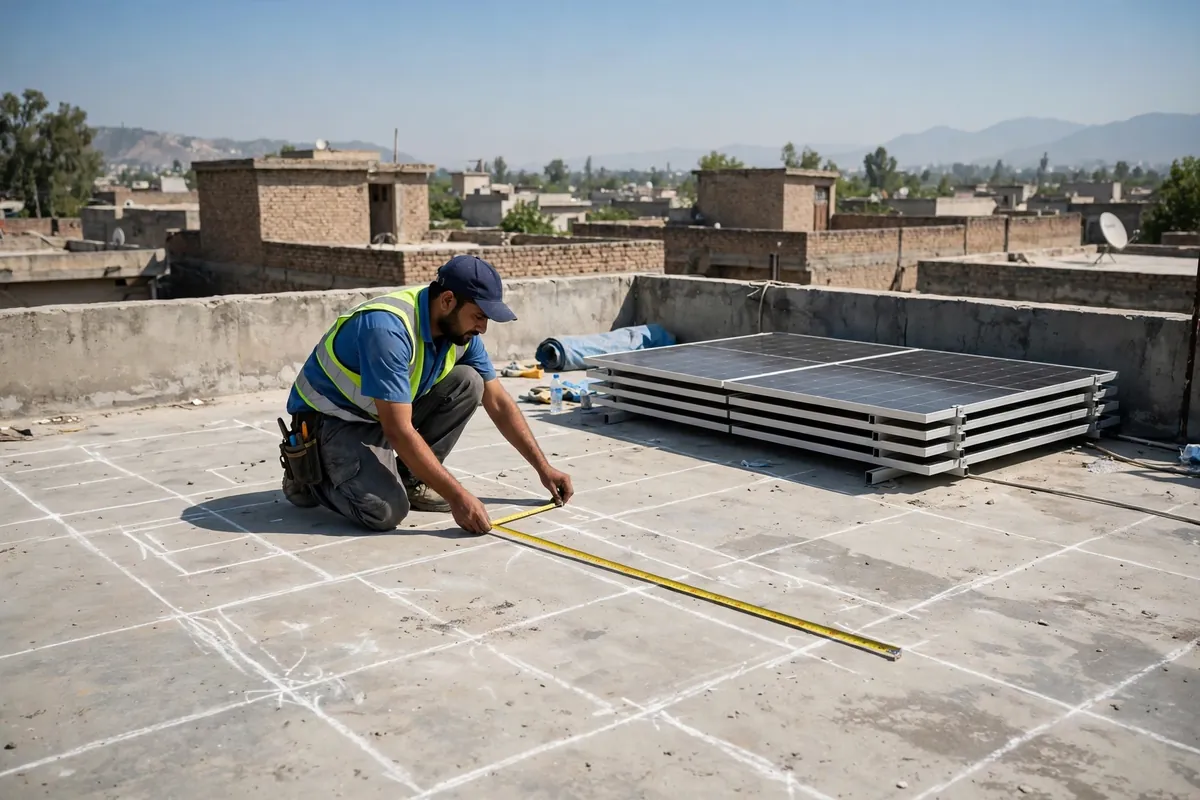
Table of Contents — Tap to Jump to a Section
- 01The Short Answer
- 02Step 1: Find Your Monthly Units on the…
- 03Step 2: Convert to Daily Units
- 04Step 3: Use Peshawar's Peak Sun Hours
- 05Step 4: Add a Loss Margin, Then Count…
- 06Worked Examples: 300, 500, and 800-Unit…
- 07Panel Count Changes With Panel Wattage
- 08Roof Space: Will It Fit?
- 09Why Slight Oversizing Helps
- 10Common Sizing Mistakes
- 11FAQs
The Short Answer
Take your monthly units from your PESCO bill. Divide by 30 for daily units. Divide by 4.5 (Peshawar’s peak sun hours) for system size in kW. Divide the watts by your panel wattage for the panel count. A 500-unit monthly bill needs roughly a 4–5 kW system — about 8–9 modern panels. The full method follows below.
Step 1: Find Your Monthly Units on the PESCO Bill
Ignore the rupee amount. Find “units consumed” or kWh on your bill. That single number drives everything. Pull your last six months of bills if you can. Peshawar summers (May–July) run ACs hard, so your highest months matter most.
Size for your peak months, not your average. A system sized for winter leaves you buying expensive grid power all summer. If your July bill shows 800 units and January shows 300, design around 700–800. Solar is cheapest when it covers your worst month.
Step 2: Convert to Daily Units
Divide monthly units by 30. A 600-unit bill becomes 20 units per day. One “unit” equals one kWh. This daily number is what your panels must produce each day. Simple so far.
Step 3: Use Peshawar’s Peak Sun Hours
Peshawar gets about 4.5 peak sun hours daily on average — higher in June, lower in December. “Peak sun hours” means the equivalent hours of full-strength sunshine. Divide your daily units by 4.5 to get raw system size in kW.
Example: 20 daily units ÷ 4.5 = 4.4 kW. That is the raw size before real-world losses.
Step 4: Add a Loss Margin, Then Count Panels
Panels never hit lab ratings on a real roof. Dust from Peshawar’s streets, summer heat, and inverter conversion losses shave output. Multiply by 1.15 (a 15% margin). Then divide total watts by your panel wattage.
Example: 4.4 kW × 1.15 = 5.06 kW → round to a 5 kW system. With 585 W panels: 5,000 ÷ 585 = 8.5 → 9 panels.
The full formula:
(Monthly units ÷ 30 ÷ 4.5) × 1.15 = system size in kW
Do solar panels produce less in Peshawar winters? Yes. December output can drop 20–30% below summer. The 4.5-hour figure already averages the year. If winter coverage matters to you, size up slightly or accept some grid imports in December.
Worked Examples: 300, 500, and 800-Unit Bills
Three households, three calculations. These mirror real PESCO bills we see across Hayatabad, University Town, and DHA Peshawar.
Example A: 300 units/month (small home, Tehkal)
300 ÷ 30 = 10 units/day. 10 ÷ 4.5 = 2.2 kW × 1.15 = 2.5 kW system. With 585 W panels: 2,500 ÷ 585 = 4.3 → 5 panels. A 3 kW inverter gives headroom. This covers fans, lights, fridge, TV, and a washing machine. One small AC fits during sunny hours.
Example B: 500 units/month (medium home, University Town)
500 ÷ 30 = 16.7 units/day. 16.7 ÷ 4.5 = 3.7 kW × 1.15 = 4.3 kW → 5 kW system. With 585 W panels: 5,000 ÷ 585 = 8.5 → 9 panels. A 5 kW hybrid inverter suits this home. It runs one 1.5-ton inverter AC plus the full household load through the day.
Example C: 800 units/month (large home, DHA Peshawar)
800 ÷ 30 = 26.7 units/day. 26.7 ÷ 4.5 = 5.9 kW × 1.15 = 6.8 kW → 7 kW system. With 585 W panels: 7,000 ÷ 585 = 12 → 12 panels. A 8 kW hybrid inverter gives comfortable headroom. Two inverter ACs plus household load fit easily.
| Monthly Units | Daily Units | System Size | 585 W Panels | Typical Inverter |
|---|---|---|---|---|
| 300 | 10 | 2.5–3 kW | 5 | 3 kW hybrid |
| 500 | 16.7 | 4–5 kW | 9 | 5 kW hybrid |
| 800 | 26.7 | 7–8 kW | 12 | 8 kW hybrid |
How many solar panels do I need for a 1.5-ton AC? About 5–6 panels of 585 W, dedicated to the AC’s daytime running. A 1.5-ton inverter AC draws 1,200–1,500 W. But count the whole house, not just the AC — sizing from your full bill avoids an undersized system.
Panel Count Changes With Panel Wattage
Higher-wattage panels mean fewer panels for the same system. The math is simple: system watts ÷ panel watts, rounded up.
| System Size | 550 W Panels | 585 W Panels | 610 W Panels |
|---|---|---|---|
| 3 kW | 6 | 6 | 5 |
| 5 kW | 10 | 9 | 9 |
| 7 kW | 13 | 12 | 12 |
| 10 kW | 19 | 18 | 17 |
Fewer panels also mean less mounting structure, less wiring, and faster installation. That is why most Peshawar installers now quote 580–610 W panels. Do not let anyone quote you 300 W panels in 2026 — they waste your roof.
Roof Space: Will It Fit?
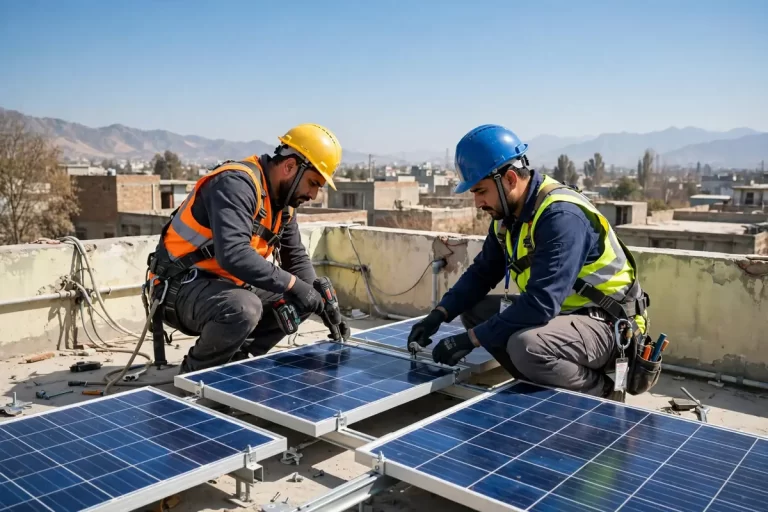
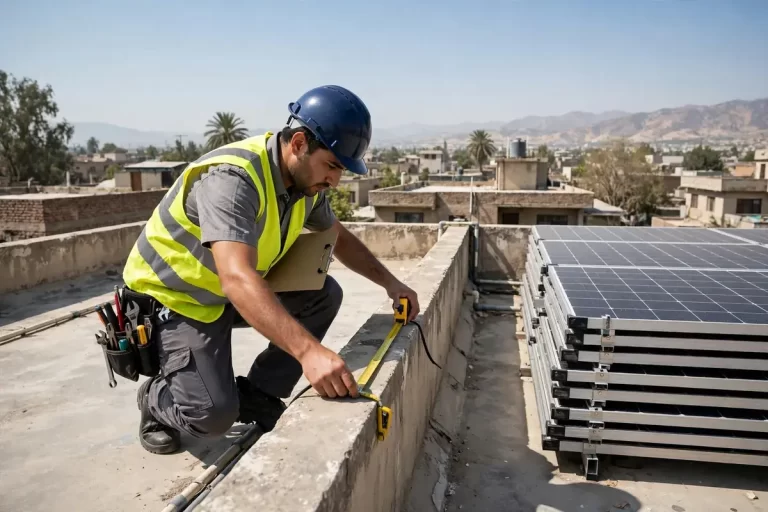
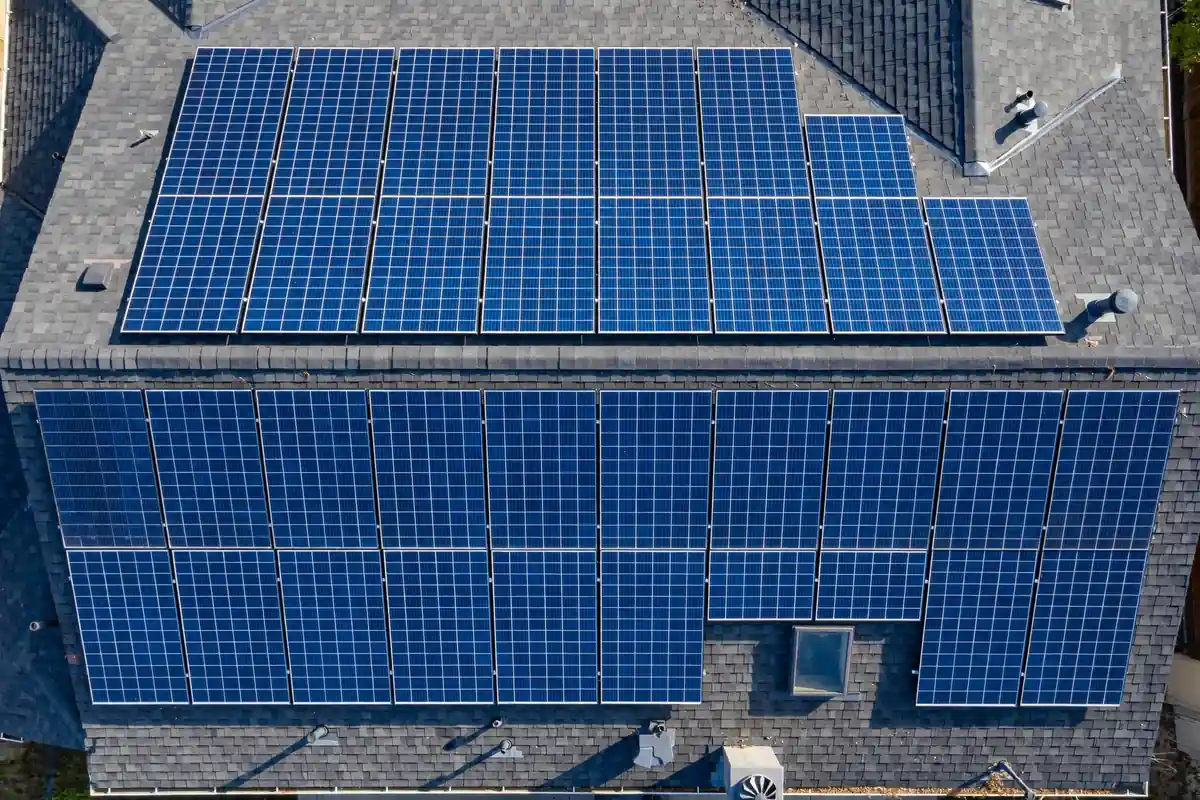
Each modern panel measures about 2.3 m × 1.1 m — roughly 2.5 square metres. Add row spacing and walkways. A good rule: multiply panel area by 1.4 for the real roof footprint.
| Panels | Panel Area | Roof Space Needed (with spacing) |
|---|---|---|
| 5 | 12.5 sq m (~135 sq ft) | ~17 sq m (~185 sq ft) |
| 9 | 22.5 sq m (~240 sq ft) | ~32 sq m (~340 sq ft) |
| 12 | 30 sq m (~325 sq ft) | ~42 sq m (~450 sq ft) |
| 18 | 45 sq m (~485 sq ft) | ~63 sq m (~680 sq ft) |
A 5-marla house in Gulbahar or Saddar typically offers 40–50 sq m of usable roof. A 10-marla home in Hayatabad offers 80–100 sq m. Watch for shade from the mumtee, water tanks, and neighbouring buildings. One shaded panel can drag down its whole string.
Does my roof direction matter in Peshawar? Yes. South-facing is best. East or west-facing roofs still work but produce 10–15% less. Flat roofs are common in Peshawar and work fine with tilted mounting structures.
Why Slight Oversizing Helps
Net billing in 2026 changed the game. Exported units now earn far less than imported units cost . So why oversize at all? Three reasons.
First, tariffs rise. PESCO rates have climbed for years. A system sized for today’s bill covers tomorrow’s tariff hikes with free units.
Second, loads grow. Families add ACs, deep freezers, and water pumps. A 15–20% margin absorbs a new appliance without a second installation.
Third, panels degrade slowly — about 0.5% per year. A system that exactly matches your bill today falls slightly short in year ten. Oversizing covers the gap.
Do not oversize wildly. Doubling your system doubles cost for export credits worth a fraction of retail. The sweet spot: 10–20% above your calculated size. Your installer should confirm the size against your sanctioned load before finalizing.
Can I add more panels later? Yes, if your inverter and structure have headroom. This is why sizing the inverter slightly above today’s panel count pays off. Adding 4 panels later beats replacing a too-small inverter.
Common Sizing Mistakes
Sizing from the rupee amount. Bills mix tariffs, taxes, and fuel adjustments. Only units matter.
Sizing from one winter bill. December bills hide summer AC load. Use peak months.
Ignoring the sanctioned load. PESCO caps your system at your sanctioned load. Check your bill’s sanctioned kW before ordering.
Forgetting shade. That new plaza going up next door on Warsak Road will shade your roof by next year. Survey with tomorrow’s shade in mind.
Trusting a phone quote. No site visit means no shade analysis, no roof measurement, no load survey. A quote without a visit is a guess.
Frequently Asked Questions
How many solar panels do I need for a 300-unit bill in Peshawar?
About 5 panels of 585 W, making a 2.5–3 kW system. This suits a small home with fans, lights, fridge, and TV. Add one more panel pair if you run an AC daily.
How many panels fit on a 5-marla house roof?
A 5-marla roof typically holds 10–14 modern panels after spacing and shade clearance — enough for a 5–7 kW system. A site survey confirms the exact layout around your mumtee and water tank.
Should I size my system for summer or winter bills?
Summer. Your May–July PESCO bills show your true peak. A system sized for winter leaves you buying grid power at the highest tariff all summer.
Do I need batteries with my panel count?
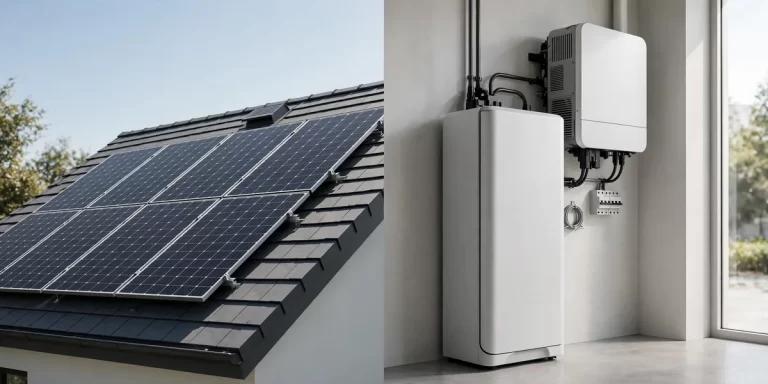
Panels alone cut your daytime bill. Batteries add night-time backup during load shedding. In areas like Tehkal or Warsak Road with frequent outages, a hybrid system with lithium batteries protects the panels’ value after sunset.
What if my roof is too small for the panels I need?
Use higher-wattage panels (610 W) to shrink the count. Or size for your daytime load and let the grid cover the rest. A smaller system that fits beats a bigger one that does not.
How accurate is the bill-to-panels formula?
It lands within 10–15% for most homes. A professional survey refines it with shade analysis, roof orientation, and your actual appliance list. Treat the formula as your starting estimate, not the final design.
Size It Right, Then Install Once
Guessing your panel count wastes money two ways: too few panels leaves bills high, too many panels wastes roof and rupees. The bill-to-panels method takes five minutes and gets you close. A proper survey gets you exact.
Zain Solar System offers free site surveys across Hayatabad, DHA Peshawar, University Town, Gulbahar, Regi Model Town, and Saddar. Bring your PESCO bills — we will calculate your exact panel count, check your roof, and quote a system sized for your home, not a guess. WhatsApp 0301-5905082 today.