Solar for Mosques in Peshawar: Sizing, Costs & 3-Phase Systems
Solar for Mosques in Peshawar: Sizing, Costs & 3-Phase Systems
A mosque runs on a different clock from a home. Fans and lights peak at Fajr before sunrise and at Isha after dark, when panels make nothing. The sound system, the wuzu water pump, and summer air conditioners add loads a house never sees. This guide explains what solar for mosque Peshawar committees need to know: the right size, the real cost, batteries for dawn and night prayers, and how 3-phase systems work.
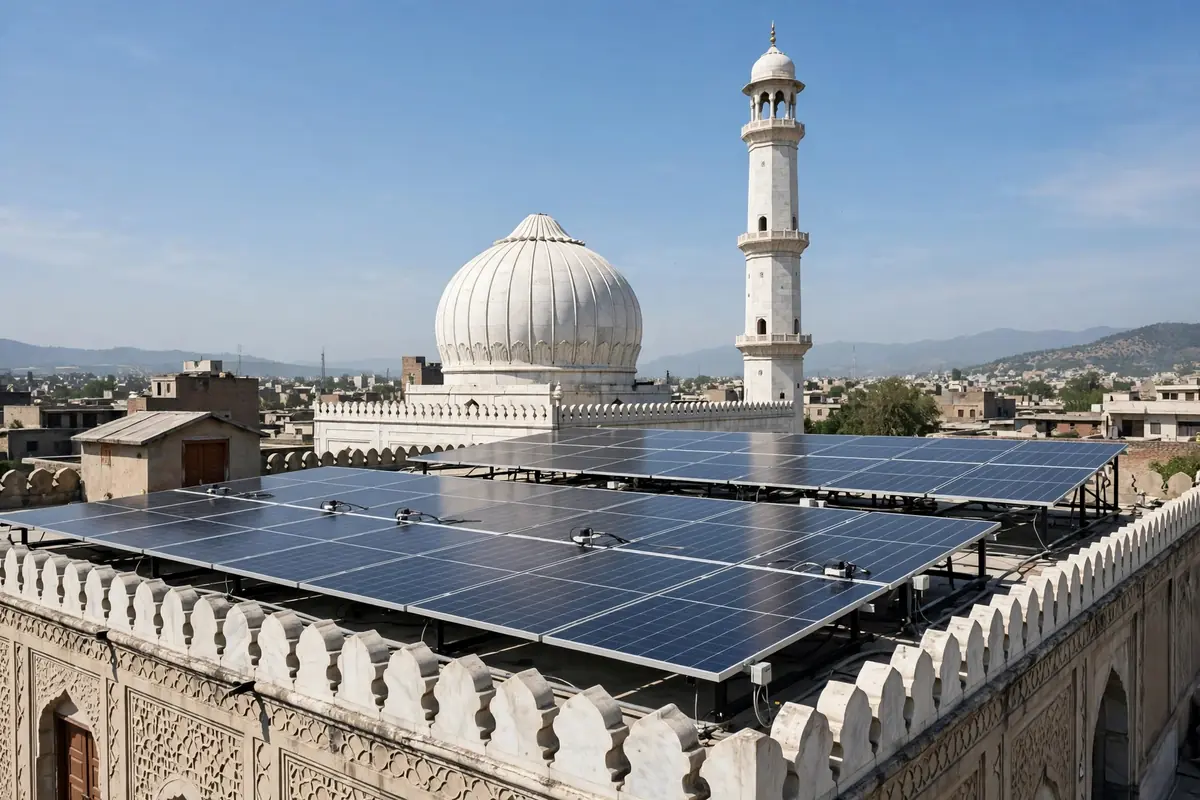
Table of Contents — Tap to Jump to a Section
Who is this guide for? Mosque committees, caretakers, and donors in Peshawar who want to cut the mosque’s PESCO bill and keep the fans and the sound system running through load shedding. It covers small neighbourhood mosques, mid-size mosques, and large jamia mosques — and the 3-phase question that decides the inverter.
Why a Mosque Needs Different Solar
A home’s biggest load is the air conditioner in the afternoon, when the sun is strongest. A mosque’s biggest loads fall at dawn and after dark. Fajr prayer starts before sunrise. Isha prayer runs after sunset. At both times the panels make nothing, so the batteries carry the load. That single fact changes the whole design: a mosque system is sized for the batteries as much as for the panels.
The daytime prayers still matter. Zuhr and Asr fall in full sun, and the panels cover the fans and lights easily. Jummah is the weekly peak: a full hall, every fan running, the sound system at full volume, and the air conditioners on in summer.
The loads are different too. A mosque runs many ceiling fans at once — ten, twenty, sometimes thirty or more. The sound system draws power for the amplifier and the speakers. The wuzu area needs a water pump, and the pump’s starting surge is two to three times its running watts. All of it must be counted before the quote, not after.
What a Mosque Actually Uses: The Load Table
Count the loads first, then size the system. Here is what the common mosque loads draw.
| Load | Typical watts | Notes |
|---|---|---|
| Ceiling fan (1) | 75W | 10–30 fans in a mosque |
| LED lights | 10–15W each | Hall + wuzu + courtyard |
| Sound system (amplifier + speakers) | 200–500W | Peaks during azaan and khutbah |
| Water pump (1 HP, wuzu) | 750W + surge | Starting surge 2–3× running watts |
| Inverter AC 1.5-ton (1) | 1,200–1,500W | Summer only, 1–4 units |
| Deep freezer | 150–200W | Runs day and night |
A small mosque with 10 fans (750W), lights (150W), and the sound system (300W) runs about 1,200 watts during prayers. Add the water pump and the total crosses 2,000 watts. That is why the inverter must be bigger than the steady load — the pump’s surge decides the inverter size, not the fans.
Summer changes the math. Two inverter ACs add 2,400 to 3,000 watts. If the mosque runs ACs, they go in the load count from day one.
What Size System Does a Mosque Need?
Size follows the load and the bill. Check the mosque’s last three PESCO bills and take the highest month — usually a summer month, when the ACs run. That number, plus the fan count, gives the system size.
| Mosque size | Typical setup | System size | Monthly units |
|---|---|---|---|
| Small neighbourhood mosque | 10 fans, lights, sound | 5kW | 550–650 units |
| Mid-size mosque | 20 fans, sound, pump, 1 AC | 10kW | 1,100–1,300 units |
| Large / jamia mosque | 30+ fans, 2–4 ACs, pump | 15kW | 1,650–1,950 units |
| Very large mosque | Full hall, 4+ ACs, tube well | 20kW | 2,200–2,600 units |
The monthly units come from Peshawar’s average of about 4.5 peak sun hours a day, minus dust, heat, and inverter losses. A 1kW system makes about 115 to 130 units a month — multiply by the system size and you get the table above. Winter drops the numbers by 20 to 30 percent.
What about the roof? A 5kW system needs about 25 square metres, a 10kW system about 50, and a 20kW system about 100, including walkways for cleaning. The real check is shade: the minaret and the dome cast shadows that move through the day.
Not sure which size fits your mosque? Read our 3kW vs 5kW vs 10kW sizing guide before you decide.
Mosque Solar Costs in Peshawar
Prices change with the market, so treat every figure below as an estimate to confirm before you buy. A typical solar for mosque Peshawar quote for a mid-size mosque is a 10kW hybrid system with four tubular batteries. Small mosques cost less. Large mosques cost more, and the per-watt cost falls as the system grows.
| System | On-grid estimate | Hybrid estimate |
|---|---|---|
| 5kW | Rs 550,000–850,000 | Rs 780,000–1,250,000 |
| 10kW | Rs 850,000–1,650,000 | Rs 1,185,000–2,500,000 |
| 15kW | Rs 1,300,000–2,400,000 | Rs 1,800,000–3,400,000 |
| 20kW | Rs 1,700,000–3,200,000 | Rs 2,400,000–4,500,000 |
Batteries are the second-biggest cost after the panels. One 150Ah tubular battery adds roughly Rs 45,000–60,000. A 5kW mosque system usually takes two batteries, a 10kW system takes four, and a 20kW system takes eight. Lithium batteries cost more but last longer and need no water top-ups.
How are mosque systems usually funded? Most Peshawar mosques fund solar through community donations. Get a written quote first — panels, inverter, batteries, structure, and labour listed line by line — and then collect against that quote. A verbal price that grows after the work starts is the complaint every committee wants to avoid.
How fast does it pay back? Divide the total cost by the monthly savings. A mid-size mosque saving about 1,100 units a month cuts its bill by roughly Rs 30,000–38,000 a month. That puts simple payback around 3 to 4 years for an on-grid system. A hybrid system pays back slower because batteries add cost without adding generation.
3-Phase Systems: What Committees Must Know
Most small mosques have a single-phase PESCO connection, and a single-phase inverter is the right match. Larger mosques often have a 3-phase connection, and that changes the inverter. A 3-phase inverter feeds all three phases evenly. A single-phase inverter on a 3-phase connection loads one phase and leaves the others idle, which wastes capacity and can trip the breaker.
The rule of thumb is simple. Up to 10kW on a single-phase connection, a single-phase hybrid inverter works. Above 10kW, or on any 3-phase connection, use a 3-phase inverter. The connection type is printed on the PESCO bill — check it before the inverter is quoted.
Sanctioned load is the second check. Your PESCO connection has a sanctioned load, and your solar system should not exceed it. A mosque with a 10kW sanctioned load cannot install a 20kW system without a load increase. The survey checks the sanctioned load from the bill and sizes the system to fit it.
Net billing needs the same checks. A 3-phase site needs a 3-phase green meter. The export buyback under the new net billing rules is around Rs 8–11 per unit. A mosque exports most in the midday hours, when the hall is empty between prayers — that export pays for the green meter over time.
Batteries & Backup: Power for Fajr and Isha
Panels make nothing before sunrise or after sunset. Fajr and Isha run on batteries, so the battery bank is sized for those two prayers. A mid-size mosque needs about 2 to 3 hours of fans, lights, and sound system on battery. Two tubular batteries cover a small mosque. Four cover a mid-size one. The bank should be sized for the load, not for the panel count.
Winter makes the battery question harder. Fog cuts daytime charging, so the batteries may not fully charge on a dense fog day. Clean panels every 10 to 15 days in fog season, and the charging holds up.
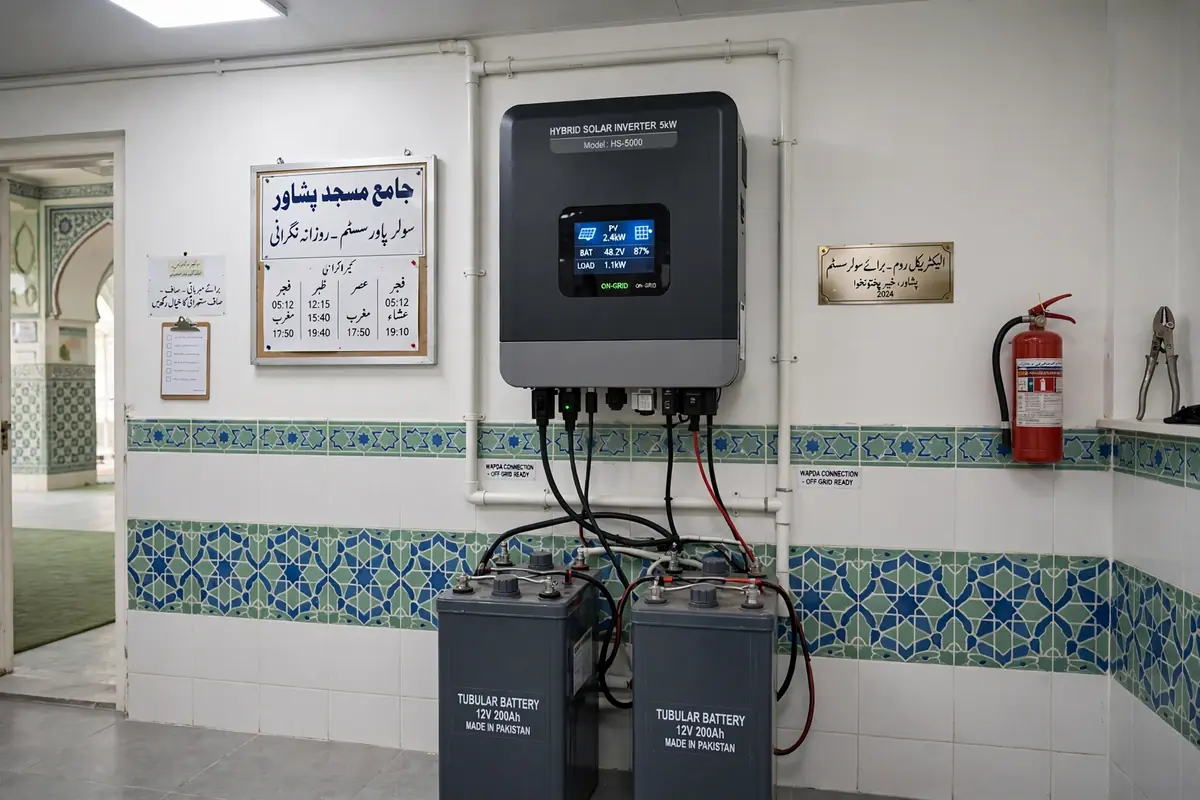
Battery care is simple but not optional. Tubular batteries need their water topped up every few weeks, and the level must stay above the plates — a dry battery dies early. Lithium batteries need no water and last longer. Either way, the batteries sit in a ventilated room, away from the prayer hall, with the inverter on the wall above them.
See what happens to solar during Peshawar load shedding for the full backup picture.
Installation on a Mosque Roof
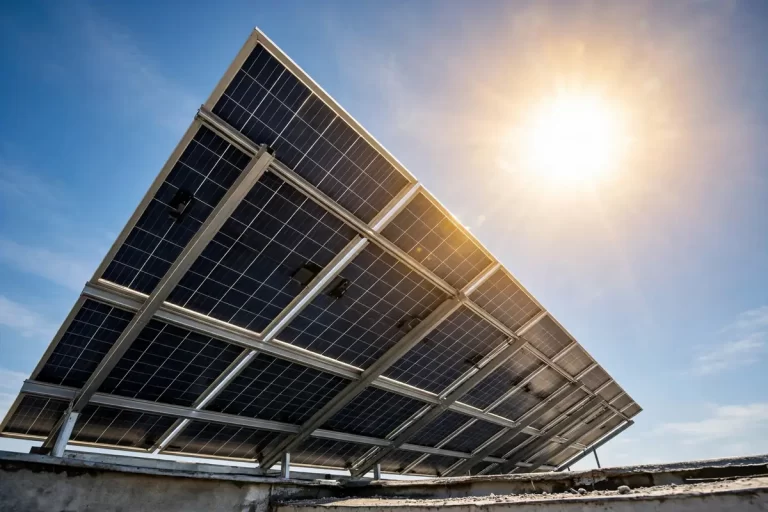
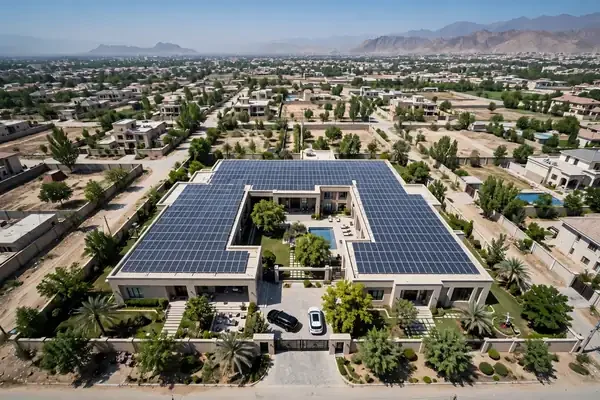
Mosque roofs are usually flat and open, which makes installation simple. The structure is the same galvanized frame used on homes, tilted to face south. The panels must clear the dome’s shadow and the minaret’s shadow, which move across the roof through the day. A shade map at survey time settles the layout.
Three installation details matter. First, earthing and surge protection — a mosque system still connects to the PESCO grid, so proper earthing and an SPD are not optional. Second, cable routes — cables should run along walls and roof edges, never across prayer areas or walkways. Third, the inverter and batteries go in a ventilated room near the meter, not in the prayer hall, so the sound of the inverter fan never disturbs a prayer.
Installation usually takes two to three days for a 10kW mosque system — one day for the structure, one day for panels and wiring, and a final day for testing. The mosque stays open throughout.
Read our solar panel tilt angle and direction guide for the exact angles that work in Peshawar.
Frequently Asked Questions
Can solar run a mosque’s fans during load shedding?
Yes, with a hybrid system and enough batteries. Fans, lights, and the sound system stay on for 2 to 3 hours on a four-battery bank. An on-grid system shuts down when the grid fails, so it gives no backup at all.
What size solar system does a mosque need?
A small neighbourhood mosque with 10 fans needs about 5kW. A mid-size mosque with 20 fans, a sound system, and a water pump needs about 10kW. A large jamia mosque with 30 or more fans and air conditioners needs 15kW to 20kW.
Is solar for mosque Peshawar worth it if the mosque is empty most of the day?
Yes, if the bill is high. The mosque still runs five prayers a day plus Jummah, and the daytime surplus exports to the grid under net billing at around Rs 8–11 per unit. An empty hall at noon is an exporting hall — that export pays the bill down.
Does a mosque need a 3-phase solar system?
Only if the mosque has a 3-phase PESCO connection or the system is above 10kW. Small mosques on a single-phase connection use a single-phase inverter. Check the connection type on the PESCO bill before the inverter is quoted.
How are mosque solar systems funded?
Most Peshawar mosques fund solar through community donations. Get a written quote first, with every item listed, and collect against that quote.
Can panels go on a mosque roof with a dome and minaret?
Yes, with a shade check. The minaret and the dome cast shadows that move through the day, so the survey maps the shade path and places the panels in the clear area.
Get a Mosque Solar Quote in Peshawar
A mosque solar system is a community asset. It cuts the PESCO bill for decades, it keeps the fans and the sound system running through load shedding, and it pays for Fajr and Isha from batteries charged by the midday sun. The only wrong move is guessing the size or the inverter type.
Ask us for a solar for mosque Peshawar quote — free site survey for mosques across Hayatabad, University Town, Tehkal, Gulbahar, and Saddar. Bring the mosque’s last three PESCO bills. We will count the fans, check the shade from the minaret and dome, check the sanctioned load and the connection type, and give the committee a written quote it can collect against. WhatsApp 0301-5905082 today.