
1kW Solar System in Peshawar: Cost, Units & What It Can Run
1kW Solar System in Peshawar: Cost, Units & What It Can Run
A 1kW system is the smallest useful solar setup you can buy in Peshawar. Two panels on your roof. One inverter on your wall. Enough power for fans, lights, a TV, and a fridge — about 120 units a month. It will not run an air conditioner or a water pump. But for a small home, a single room, or a shop that needs lights and fans through load shedding, it is often the smartest first step. This guide covers what a 1kW solar system Peshawar buyers actually get: real output, real costs, and a load table you can check against your own home.
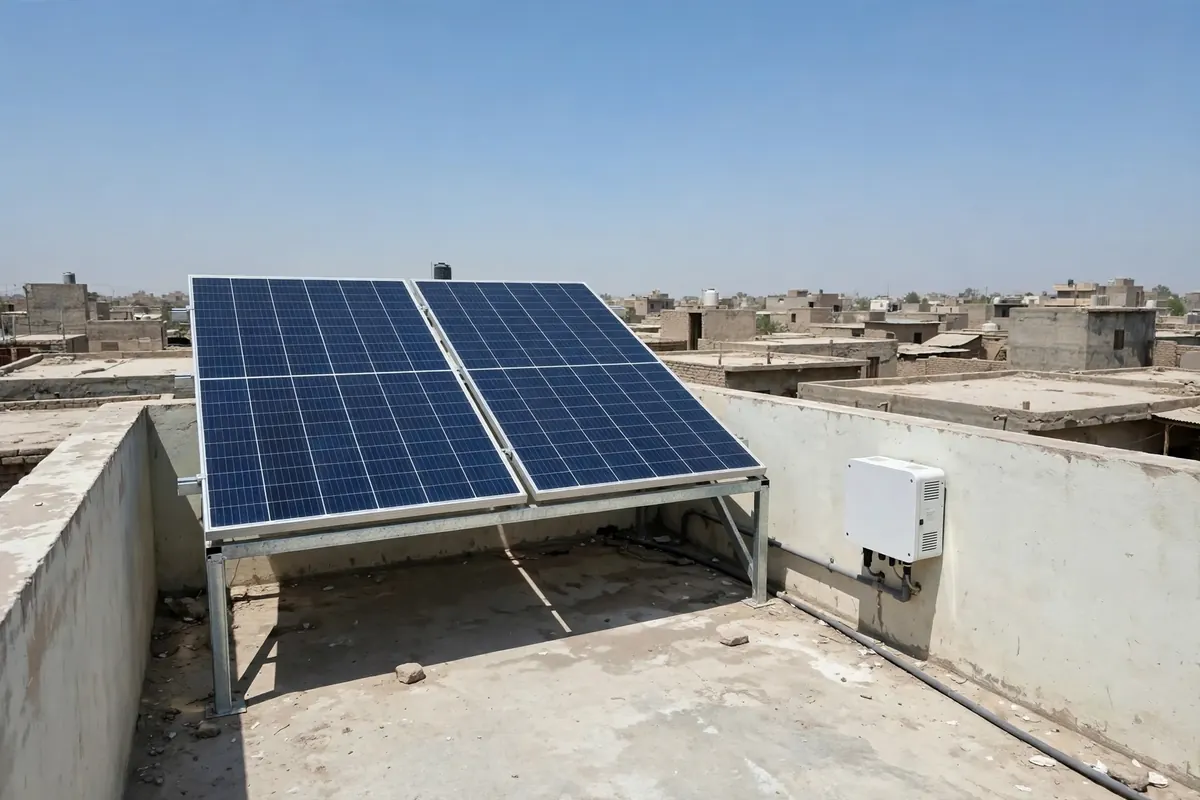
Table of Contents — Tap to Jump to a Section
Who should buy a 1kW system? Anyone whose daytime load stays under 800 watts and whose monthly bill stays under 150 units. That covers small 3 to 5 marla homes, a single portion of a bigger house, a shop, or a hostel room. If you run an AC, you need a bigger system.
What a 1kW System Actually Is
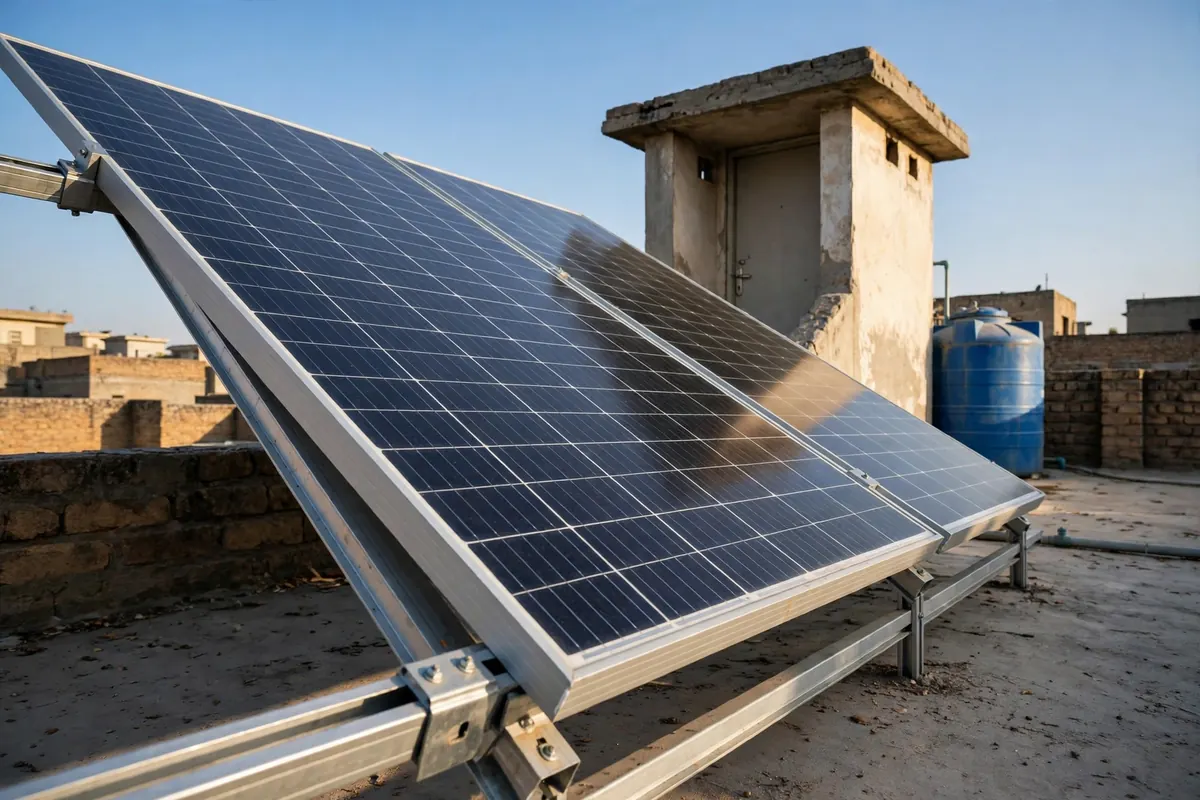
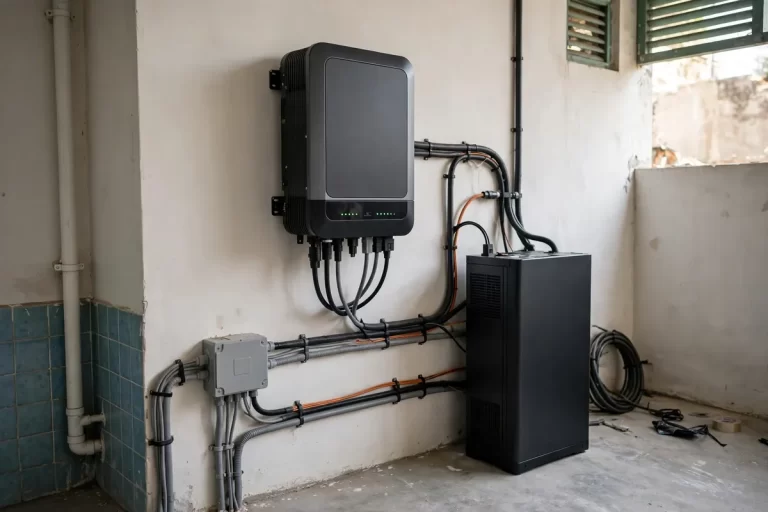
A 1kW system has four parts. Two solar panels, usually 550 to 585 watts each. One inverter rated at 1kW. A mounting structure. And the wiring plus protection devices that connect everything safely.
Two modern panels make 1,100 to 1,170 watts at peak. The inverter is rated at 1kW, so the system is sold as 1kW. This is the standard entry size across Pakistan. Anything smaller stops making sense, because fixed costs — structure, wiring, labour, transport — stay almost the same whether you buy 1kW or 3kW.
There are two types. An on-grid 1kW system connects to your PESCO meter. It cuts your bill but gives no backup during load shedding. A hybrid 1kW system adds one battery and keeps fans and lights running when the grid fails. The hybrid costs more, but for many Peshawar homes it is the whole point of buying solar.
Not sure whether 1kW is your size? Read our 3kW vs 5kW vs 10kW sizing guide before you decide.
How Many Units Does a 1kW System Produce?
Peshawar gets about 4.5 peak sun hours a day on average. Multiply system size by peak sun hours. A 1kW system makes about 4.5 units on a clear day before losses. Dust, heat, and inverter losses take 10 to 15 percent. Real output lands at 3.8 to 4.2 units a day. That is roughly 115 to 130 units a month, and about 1,400 to 1,550 units a year.
Output changes with the season. Summer gives the most, winter the least, because days are short and fog blocks the sun. A 1kW solar system Peshawar homeowners install in November will show its weakest numbers in December and January. That is normal. The yearly average is what matters.
| Season | Daily output | Monthly output |
|---|---|---|
| Summer (May–Jul) | 4.5–5.0 units | 135–150 units |
| Spring / Autumn (Mar–Apr, Sep–Oct) | 4.0–4.5 units | 120–135 units |
| Winter (Dec–Jan) | 3.0–3.5 units | 90–105 units |
| Cloudy / monsoon days | 2.5–3.5 units | varies |
Do panels produce anything on a foggy day? Yes, but less. Heavy fog can cut output by half or more for that day. Thin fog and haze cost 20 to 30 percent. Cleaning helps — a dusty panel in fog season loses more than a clean one.
What Can a 1kW System Run?
This is the question that decides everything. A 1kW inverter delivers about 800 watts of continuous usable power. Your running load must stay under that line. Here is what common appliances draw.
| Appliance | Typical watts | Runs on 1kW? |
|---|---|---|
| Ceiling fan (1) | 75W | Yes |
| LED lights (6) | 60W | Yes |
| LED TV (32–43 inch) | 100–150W | Yes |
| Refrigerator (small) | 150–200W | Yes |
| Laptop + WiFi router | 75W | Yes |
| Mobile charging | 20W | Yes |
| Washing machine (no heater) | 400–500W | Only alone |
| 1.5-ton inverter AC | 1,200–1,500W | No |
| Electric iron | 1,000W | No |
| Water pump (1 HP) | 750W + surge | No |
| Electric geyser | 1,500–2,000W | No |
A typical daytime load fits easily. Four fans (300W) plus six LED lights (60W) plus a TV (120W) plus a fridge (150W) totals about 630 watts. Add a laptop and router and you are still under 750 watts.
The hard rule is simple. Anything with a heating element is out. Irons, geysers, and electric heaters draw more than the whole system can give. Air conditioners are out too — even an inverter AC needs 1,200 watts or more. A water pump is out because its starting surge is two to three times its running watts.
1kW System Cost in Peshawar
Prices change with the market, so treat every figure below as an estimate to confirm before you buy. Panels are the biggest cost, then the inverter, then the rest.
| Component | Specification | Estimated cost |
|---|---|---|
| Solar panels | 2 × 585W Tier-1 (Jinko / Longi / Canadian) | Rs 45,000–55,000 |
| Inverter (on-grid) | 1kW | Rs 35,000–50,000 |
| Elevated structure | Galvanized iron, 3–4 ft | Rs 15,000–20,000 |
| Cables + protection | DC/AC cables, breakers, SPD, earthing | Rs 10,000–15,000 |
| Installation labour | 1-day work | Rs 10,000–15,000 |
| Total (on-grid) | Rs 115,000–155,000 |
A hybrid 1kW system costs more. The hybrid inverter costs extra, and one tubular battery (150Ah) adds roughly Rs 45,000–60,000. Budget roughly Rs 180,000–230,000 for a hybrid 1kW setup with one battery.
One warning about price. Per watt, a 1kW system costs more than a 5kW system, because the structure, wiring, and labour do not shrink with the system. If your load is close to the 1kW limit, price a 2kW or 3kW system too.
How fast does a 1kW system pay for itself? Divide the total cost by your monthly savings. At about 120 units a month, a household on the 201–300 unit slab saves roughly Rs 4,000 a month. That puts simple payback around 2.5 to 3.5 years for an on-grid system. A hybrid system pays back slower because the battery adds cost without adding generation.
Is 1kW Enough for Your Home?
Use your monthly bill as the test. Check your last three PESCO bills and take the highest month. Under 150 units with no AC, 1kW is usually enough. At 200 to 400 units, or with one inverter AC, step up to 3kW. Over 400 units or two ACs, you need 5kW or more. The bill never lies.
A 1kW system fits these buyers best. A small 3 to 5 marla home with fans, lights, TV, and a fridge. One portion of a larger house. A shop that needs lights, fans, and a small fridge through the day. A hostel room or a single-room setup. Or a backup-only system for essential loads.
It does not fit a home with an AC, a water pump, or an electric geyser on the same load. Buying 1kW when you need 3kW wastes money twice: once on the small system, and again on the upgrade.
Can I add panels to a 1kW system later? Sometimes, if your inverter accepts more panel watts. Most 1kW inverters have little headroom, so the cheaper move is to buy the right size the first time. A free site survey settles the question before you spend anything.
Book a free site survey and we will size your system from your actual bills.
1kW On-Grid vs Hybrid: Which One?
The choice is about load shedding, not about generation. Both types make the same units. The difference is what happens when PESCO goes down.
An on-grid system shuts down during load shedding. This is a safety rule, not a flaw. It cannot feed power into a dead grid. Your bill falls, but your fans stop when the power goes. On-grid is the cheapest option and the right one if your only goal is a lower bill.
A hybrid system with one battery keeps running. Fans, lights, TV, and the fridge stay on for 3 to 4 hours on a 150Ah tubular battery, depending on the load. That is the whole value of hybrid in Peshawar: comfort during the 2 to 4 hours of daily load shedding that many areas still face.
Net metering is not worth it at 1kW. The application fee, the green meter, and the paperwork cost more than the small export earns. A 1kW system exports almost nothing anyway — a small home consumes nearly everything it makes.
See what happens to solar during Peshawar load shedding for the full backup picture.
Installation: Roof Space, Structure & Wiring
Two panels need about 5 square metres of roof. Add walkway space for cleaning, and plan for roughly 7 square metres in total. That fits on almost any roof, including a small 3 marla house. A flat roof works fine with a tilted mounting structure.
Three installation details matter even on a small system. First, direction and tilt — panels face south, the same rule as a big system. Second, earthing and surge protection — a 1kW system still connects to your home wiring, so proper earthing and an SPD are not optional. Third, shade. One shaded panel drags the whole string down, so check for shade from the mumtee, water tanks, and the neighbour’s wall before the structure goes up.
Read our solar panel tilt angle and direction guide for the exact angles that work in Peshawar.
Frequently Asked Questions
Can a 1kW system run a fridge and fans together?
Yes. A small fridge draws 150 to 200 watts and four fans draw 300 watts. Add lights and a TV and the total stays under 650 watts, well inside a 1kW inverter’s usable range.
How many panels does a 1kW system need?
Two panels of 550 to 585 watts. Older 350-watt panels would need three, but nobody should buy those in 2026 — they waste roof space. Always ask for the panel wattage on the quote, not just the count.
Is a 1kW solar system Peshawar enough for a 5 marla house?
For a small 5 marla home with no air conditioner, usually yes for daytime loads — fans, lights, TV, and fridge. Evenings need the grid or a battery. If the house runs an AC or a water pump, step up to 3kW.
Does a 1kW system work during load shedding?
Only a hybrid system with a battery. An on-grid 1kW system shuts down when the grid fails. If load shedding is your main problem, buy hybrid with one battery.
What is the payback period of a 1kW system in Peshawar?
Roughly 2.5 to 3.5 years for an on-grid system, based on about 120 units a month of savings. A hybrid system takes longer because the battery adds cost. After payback, the power is effectively free for the remaining 20-plus years of panel life.
Can a 1kW system run a washing machine?
Only on its own, without a heater, and with everything else switched off. A 400 to 500 watt machine fits the inverter, but add a fridge and fans at the same time and you will trip the limit.
Get Your 1kW Quote in Peshawar
A 1kW system is a small buy with a clear job: fans, lights, TV, and fridge for a small home or shop, at the lowest entry cost in solar. If your bill is under 150 units and you run no AC, it is probably the right size. If your load is bigger, the same survey will tell you so before you spend a rupee.
Ask us for a 1kW solar system Peshawar quote — free site survey across Hayatabad, DHA Peshawar, University Town, Gulbahar, and Tehkal. Bring your last three PESCO bills. We will measure your roof, check your sanctioned load, and tell you honestly whether 1kW fits or whether 3kW is the smarter buy. WhatsApp 0301-5905082 today.


One Comment