Warsak Road Farmhouses: Off-Grid & Hybrid Solar Solutions
Warsak Road Farmhouses: Off-Grid & Hybrid Solar Solutions
Warsak Road stretches northwest from Peshawar toward the Warsak Dam. Along it sit some of the finest farmhouses in Khyber Pakhtunkhwa. Sprawling lawns. Fruit orchards. Guest houses. Swimming pools. These properties consume power like small villages.
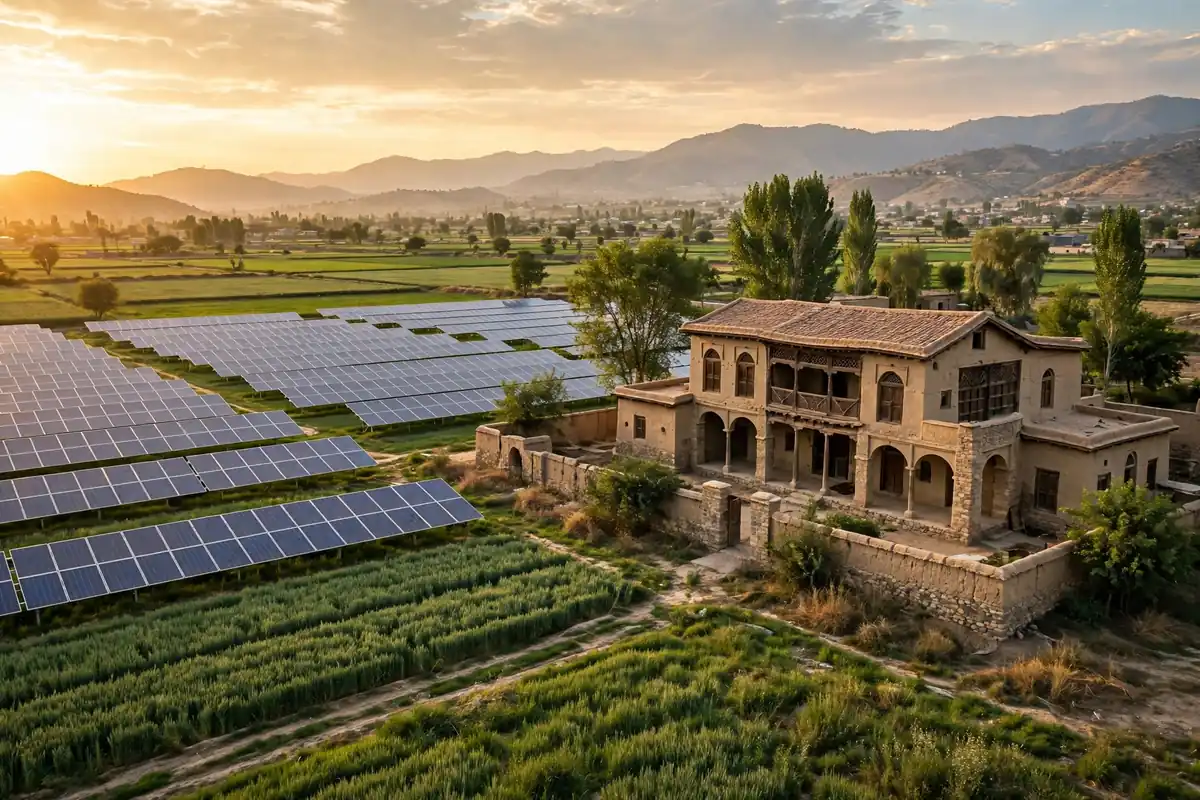
Table of Contents — Tap to Jump to a Section
But farmhouses face unique energy challenges. Grid connections are often weak or distant. Load shedding hits harder outside the city. Diesel generators burn money daily. Solar is not a luxury here. It is the most practical power source available.
This guide covers complete farmhouse solar design. Home loads, tubewells, battery banks, and costs. Everything sized for Warsak Road realities.
The Farmhouse Power Profile
A farmhouse uses power differently than a city home. Map every load before sizing anything.
Typical Farmhouse Load Breakdown
| Area | Appliances | Estimated Load |
|---|---|---|
| Main house | 3-4 inverter ACs, fridge, freezer, lights, fans | 6-8 kW |
| Guest house | 2 ACs, lights, fans, water heater | 3-4 kW |
| Tubewell/water pump | 5-10 HP motor | 4-8 kW |
| Outdoor lighting | Garden lights, security floodlights | 1-2 kW |
| Kitchen | Electric oven, microwave, dishwasher | 2-3 kW |
| Miscellaneous | Pool pump, gate motor, CCTV | 1-2 kW |
| Total peak | 17-27 kW |
Not everything runs simultaneously. A diversity factor of 60-70% applies. Realistic peak demand lands near 12-18 kW. This still dwarfs any city home system.
Can a house run on solar alone? Yes. Thousands of Pakistani farmhouses already do. But “alone” means a properly designed hybrid or off-grid system. Undersized systems fail. Correct sizing is everything.
Hybrid vs Off-Grid: Which Suits Your Farmhouse?
Most Warsak Road farmhouses have a WAPDA connection. It may be unreliable, but it exists. This makes hybrid the default choice.
System Type Comparison
| Factor | Hybrid System | Off-Grid System |
|---|---|---|
| Grid connection | Yes (as backup) | No (fully independent) |
| Batteries | Yes | Yes (larger bank) |
| Works in load shedding | Yes | Yes |
| Net metering possible | Yes | No |
| Upfront cost | High | Very high |
| Best for | Most farmhouses | Remote sites, no grid |
Choose hybrid if WAPDA reaches your property. You get bill savings plus backup. Choose off-grid only if no grid exists or the connection is unusable. Off-grid needs 30-40% more battery capacity. That adds serious cost.
What is the difference between hybrid and off-grid? Hybrid stays connected to the grid as backup. Off-grid disconnects entirely. Hybrid costs less and offers more flexibility. Off-grid suits truly remote locations.
Sizing the Home System
For the residential portion, size like a large home. A 10-15 kW hybrid system covers the main house and guest house for most farmhouses.
Ten kilowatts generates 45-50 units daily in Peshawar. That handles 3-4 ACs, all appliances, and lighting comfortably. Fifteen kilowatts suits larger properties with pools and multiple kitchens.
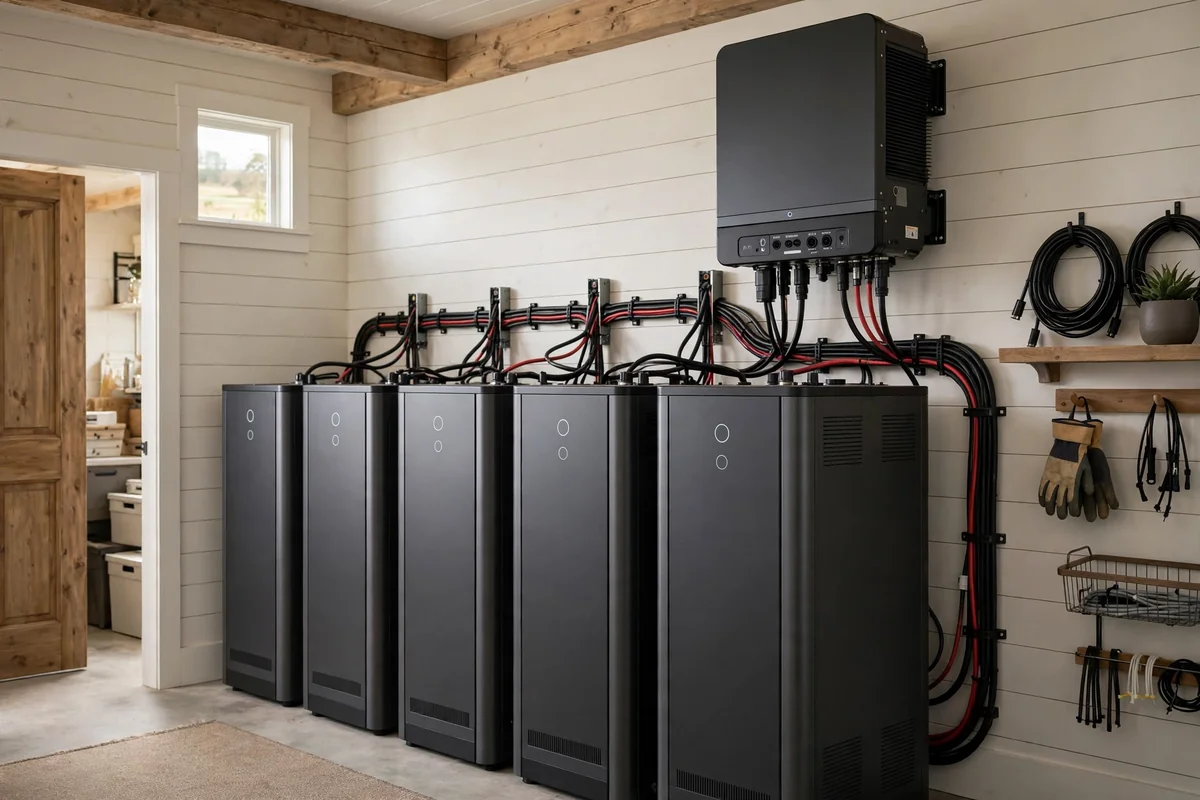
Battery sizing follows evening load. Calculate what runs after sunset: lights, fans, TVs, fridge, and maybe one AC. A typical farmhouse evening load is 3-5 kW. Four hours of backup needs 15-20 kWh of storage. That means two 10 kWh lithium batteries or a large tubular bank.
Solar Tubewells: The Game Changer
Many Warsak Road farmhouses run tubewells for irrigation and household water. Diesel pumps cost a fortune. Grid pumps suffer load shedding. Solar tubewells solve both.
A solar tubewell uses panels to drive the pump directly during sun hours. No battery needed for daytime pumping. A 5 HP pump needs about 5-7 kW of panels. A 10 HP pump needs 10-12 kW.
Tubewell Solar Sizing
| Pump Size | Panel Capacity Needed | Daily Water Output* |
|---|---|---|
| 3 HP | 4-5 kW (8 panels) | Moderate |
| 5 HP | 6-8 kW (12 panels) | Good |
| 7.5 HP | 10-12 kW (18 panels) | High |
| 10 HP | 13-15 kW (24 panels) | Very high |
*Output varies with bore depth, water table, and sun hours.
Solar tubewells need a specialized pump controller, not a standard inverter. The controller manages variable solar input as clouds pass. It protects the motor from voltage swings. Never connect a tubewell pump to a home hybrid inverter.
How much does a solar tubewell cost? A 5 HP solar tubewell system costs roughly Rs 800,000-1,200,000 in 2026. This includes panels, pump, controller, and installation. Diesel savings often recover this in 2-3 years.
Battery Bank Design for Farmhouses
Batteries are the heart of farmhouse solar. Size them generously. Undersized banks die young from deep cycling.
For lithium (LiFePO4), calculate evening load times backup hours, then add 20% margin. A 4 kW evening load for 5 hours needs 24 kWh. Two 12 kWh modules or three 8 kWh units work.
For tubular batteries, double the calculation. Lead-acid batteries should only discharge to 50%. A 20 kWh need requires 40 kWh of tubular capacity. That means sixteen 200Ah batteries. They need a ventilated room and monthly maintenance.
Lithium costs more upfront but lasts 10-12 years. Tubular costs less initially but needs replacement every 3-4 years in Peshawar heat. Over a decade, lithium usually wins on total cost.
How long do solar batteries last on a farmhouse? Lithium: 10-12 years with proper use. Tubular: 2-4 years in hot conditions with daily cycling. Farmhouse batteries cycle harder than city ones. Buy quality.
Complete Cost Estimates
Farmhouse systems are custom. But these ranges guide budgeting for 2026.
Farmhouse Solar Investment Guide
| System Component | 10 kW Hybrid Home | 15 kW Hybrid Home | 5 HP Tubewell |
|---|---|---|---|
| Solar panels | Rs 750,000-900,000 | Rs 1,100,000-1,350,000 | Rs 450,000-600,000 |
| Hybrid inverter | Rs 500,000-650,000 | Rs 700,000-900,000 | Controller: Rs 150,000-250,000 |
| Lithium batteries | Rs 700,000-1,000,000 | Rs 1,000,000-1,500,000 | Not needed |
| Structure + wiring | Rs 200,000-300,000 | Rs 300,000-400,000 | Rs 100,000-150,000 |
| Installation | Rs 100,000-150,000 | Rs 150,000-200,000 | Rs 80,000-120,000 |
| Total | Rs 2,250,000-3,000,000 | Rs 3,250,000-4,350,000 | Rs 780,000-1,120,000 |
A combined home + tubewell project often totals Rs 3-5 million. Against diesel and WAPDA costs, payback typically lands in 3-4 years. The system then serves for 20+ years.
Security and Smart Features
Farmhouses sit empty on weekdays. Solar enables smart security without grid dependence.
Solar-powered CCTV runs 24/7 on a small dedicated setup. Motion-sensor floodlights deter intruders. Electric gates operate on battery backup. A small 1-2 kW subsystem handles all security loads independently.
Remote monitoring adds peace of mind. Modern hybrid inverters include phone apps. Check generation, battery level, and consumption from anywhere. Get alerts if the system faults. You will know about problems before your caretaker does.
Frequently Asked Questions
What size solar system does a farmhouse need?
Most Warsak Road farmhouses need 10-15 kW for the home plus a separate tubewell system. Total investment typically runs Rs 3-5 million. A site survey determines exact sizing based on your loads.
Can solar run a tubewell pump?
Yes. Solar tubewells are proven across Pakistan. A 5 HP pump needs 6-8 kW of panels with a specialized pump controller. The system pumps during sun hours directly, no batteries required.
Is off-grid better than hybrid for a farmhouse?
Hybrid suits most farmhouses with a WAPDA connection. It costs less and allows net metering. Off-grid fits only truly remote properties. The battery bank for off-grid runs 30-40% larger.
How many batteries does a farmhouse need?
For a 4 kW evening load over 5 hours, you need about 20-24 kWh of lithium storage. That equals two to three battery modules. Tubular banks need double the capacity due to 50% discharge limits.
What about cloudy days and winter?
Peshawar averages 300+ sunny days yearly. Monsoon clouds reduce output 30-50% temporarily. Winter shortens days but Peshawar winters are mostly clear. Properly sized systems account for seasonal variation.
Do I need planning permission for farmhouse solar?
No special permission is needed for rooftop or ground-mount solar on private farmhouse land. Standard net metering rules apply if you connect to PESCO. Ground-mount arrays need adequate setback from boundaries.
Power Your Farmhouse Right
Warsak Road farmhouses deserve energy independence. No more diesel bills. No more load shedding anxiety. Just clean, reliable power sized for your lifestyle.
Zain Solar System designs custom farmhouse installations across Peshawar. We survey your property, calculate every load, and engineer a system that works. Home, tubewell, and security, all covered.
WhatsApp 0301-5905082 for a free farmhouse site survey. Or visit us at Nasir Bagh Road, Badizi Stop, Khalil Plaza, Shop #09, Peshawar.