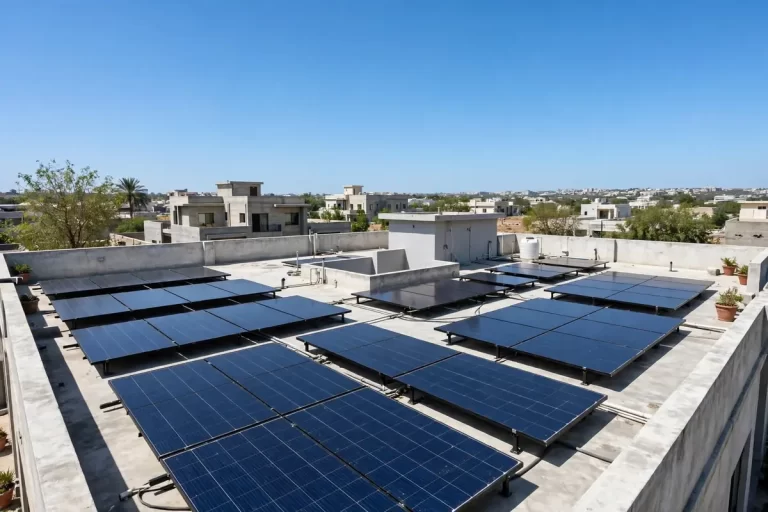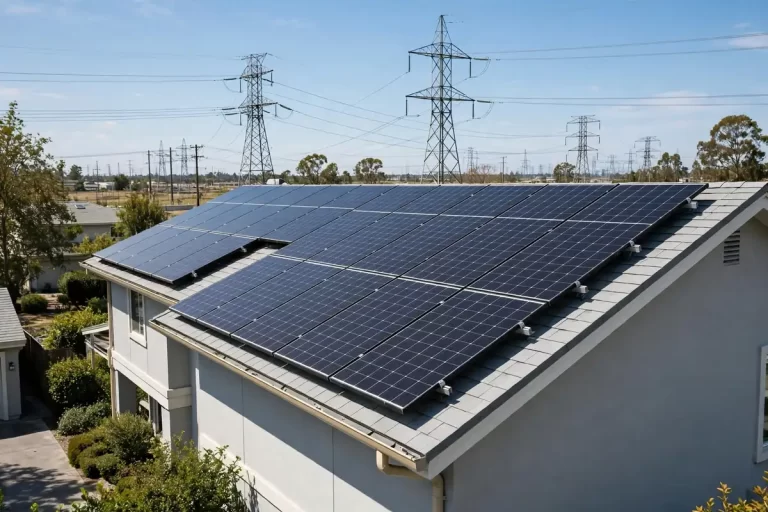
How Much Can a 5kW System Save on Your WAPDA Bill in University Town?
How Much Can a 5kW System Save on Your WAPDA Bill in University Town?
A 5kW solar system in University Town saves roughly Rs 28,000 to Rs 38,000 every month. That adds up to Rs 340,000 to Rs 410,000 per year. Most homes recover the full system cost in 3 to 4 years. After that, the electricity is nearly free for decades. This guide shows the real 5kW solar savings Peshawar homeowners see on their bills. You will get production numbers, PESCO slab math, and a month-by-month savings table. Every figure reflects University Town's high-consumption homes and 2026 net billing rules.

Table of Contents — Tap to Jump to a Section
How Many Units a 5kW System Produces in Peshawar
How many units does a 5kW system produce per day? Between 20 and 24 units on clear days. Peshawar gets strong sun for most of the year. Cloudy monsoon days drop output to 10 to 14 units. Winter days produce 14 to 18 units with shorter daylight.
Production changes with the seasons, so yearly thinking beats monthly thinking. Summer months give the highest output per day. Winter output falls but your consumption falls too. The table below shows realistic monthly production for University Town rooftops.
| Season | Months | Daily Units | Monthly Units |
|---|---|---|---|
| Peak summer | May – Aug | 22-24 | 660-720 |
| Spring / autumn | Mar-Apr, Sep-Oct | 570-660 | 570-660 |
| Winter | Nov – Feb | 14-18 | 420-540 |
| Monsoon spells | Jul (cloudy days) | 12-16 | 360-480 |
Estimates for a well-maintained 5kW system in Peshawar. Dust and shading reduce these figures.
Yearly production lands between 6,500 and 7,500 units. That is the number your savings math should use. A single good or bad month means little. Twelve months of steady generation is what pays back your investment.
Dust is the silent thief of production in Peshawar. University Town sits near busy roads with heavy dust. A dusty panel loses 10 to 15 percent output quickly. Clean panels every two weeks in summer. Monthly cleaning is enough in winter.
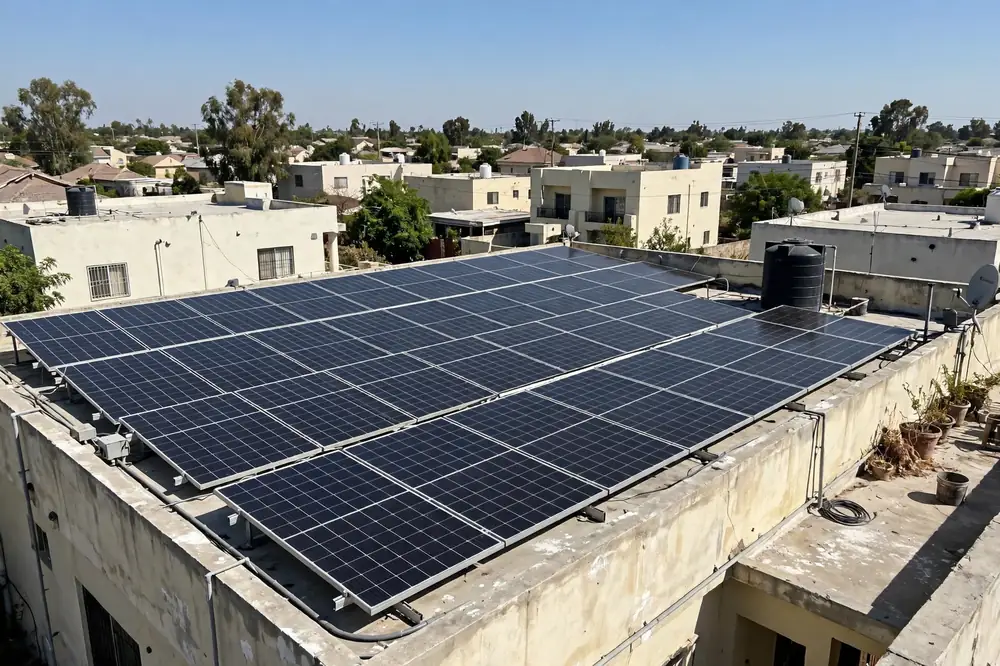
Panel angle and direction also shape your numbers. True south facing at 20 to 25 degrees tilt works best. Elevated structures in University Town usually achieve this easily. Flat-mounted panels on mumty roofs lose some output. Your installer should confirm orientation during the survey.
PESCO Slab-Wise Bill Math: Where the Savings Come From
PESCO charges higher rates as your monthly units rise. This slab system is why solar saves so much. Solar wipes out your most expensive units first. Understanding the slabs shows exactly where money stays in your pocket.
| Monthly Units Slab | Rate per Unit (Rs) — PESCO 2026 |
|---|---|
| 201 – 300 | 33.10 |
| 301 – 400 | 36.46 |
| 401 – 500 | 38.95 |
| 501 – 600 | 40.22 |
| 601 – 700 | 41.85 |
| Above 700 | 47.20 |
Official PESCO residential tariff, 2026. Unprotected consumers pay the single slab rate on all units — no progressive billing. Taxes and surcharges apply on top.
A University Town home consuming 700 units falls in the 601–700 slab at Rs 41.85 per unit (2026 PESCO tariff). Unprotected consumers pay this single rate on all units — there is no progressive slab calculation. The energy charge is 700 × 41.85 = Rs 29,295. With taxes and surcharges, the final bill lands near Rs 38,000 to Rs 42,000.
Now add a 5kW system producing 660 units in a summer month. Your family self-consumes about 60 percent during daytime. That is roughly 400 units used directly. The remaining 260 units export to PESCO through net metering. Your net import drops to about 300 units.
At 300 units net import, you drop to the 201–300 slab at Rs 33.10 per unit. Your energy charge falls to 300 × 33.10 = Rs 9,930. The final bill lands near Rs 12,500 to Rs 14,500 with taxes. Monthly saving: about Rs 25,000 to Rs 28,000 in summer. That single-slab drop is where the real saving comes from.
Winter math looks different but still wins. Production drops to 450 units, but consumption drops too. Heaters run at night, so self-consumption stays lower. Export credits from net metering cover night imports. Year-round, the system keeps you in low slabs.
Month-by-Month Savings Table
Real savings swing across the year with sun and usage. This table models a University Town home using 700 units monthly. It assumes 60 percent self-consumption and 2026 net billing rates. All figures are illustrative estimates based on 2026 PESCO single-slab tariffs.
| Month | Solar Units | Bill Without Solar (Rs) | Bill With Solar (Rs) | Monthly Saving (Rs) |
|---|---|---|---|---|
| January | 450 | 39,500 | 11,200 | 28,300 |
| February | 480 | 39,500 | 9,800 | 29,700 |
| March | 600 | 39,500 | 4,500 | 35,000 |
| April | 650 | 39,500 | 2,200 | 37,300 |
| May | 700 | 39,500 | 2,000 | 37,500 |
| June | 720 | 39,500 | 1,500 | 38,000 |
| July | 600 | 39,500 | 4,500 | 35,000 |
| August | 680 | 39,500 | 2,000 | 37,500 |
| September | 620 | 39,500 | 3,600 | 35,900 |
| October | 580 | 39,500 | 5,400 | 34,100 |
| November | 480 | 39,500 | 9,800 | 29,700 |
| December | 440 | 39,500 | 11,600 | 27,900 |
| Yearly total | 7,000 | 474,000 | 68,100 | 405,900 |
The yearly saving comes to about Rs 405,900 in this model. Summer months deliver the biggest savings each. Winter months save less but still cut bills nearly in half. No single month tells the full story.
Your actual numbers depend on your consumption pattern. Homes that run ACs during the day save more. Daytime usage means higher self-consumption of free solar units. Homes empty during the day export more instead. Export still helps, but at the lower Rs 11 to Rs 13 rate.
Shift flexible loads into sunshine hours to boost savings. Run the water pump, iron, and washing machine before 3pm. Charge inverters and devices during the day. Every unit self-consumed saves you Rs 40-plus. Every unit exported earns only Rs 11 to Rs 13.
A Real University Town Bill: Before and After
Take a typical University Town home near Tehkal with three ACs. Summer bill without solar: 750 units at roughly Rs 47,000 to Rs 49,000. The family installs a 5kW hybrid system in March. By June, the picture looks completely different.
The system generates 700 units in June. The family uses 430 units directly during daytime. They run two ACs from 10am to 5pm on solar. The washing machine and water pump also run on sunshine. Only 270 units export to PESCO at Rs 11 to Rs 13.
Night consumption draws 320 units from the grid. Net import after export credit equals a small bill. The June bill drops to roughly Rs 11,000 to Rs 13,000. That single month saves about Rs 34,000 to Rs 36,000. These are the 5kW solar savings Peshawar families describe after installation.
Winter tells a quieter but still positive story. December production falls to 440 units. The family uses heaters at night, so self-consumption drops. Export credits from net metering offset night imports partially. The December bill lands near Rs 11,000 to Rs 13,000 against Rs 38,000 to Rs 42,000 before. Savings of around Rs 27,000 still beat any bank return.
The pattern holds across University Town’s posh streets. High daytime AC use is the magic ingredient. Homes with stay-at-home families save the most. Working couples save slightly less but still win big. Every profile beats the pre-solar bill comfortably.
Payback Period: When the System Pays for Itself
Payback period is simple division with honest inputs. Divide total system cost by yearly savings. The answer tells you when solar starts earning. For University Town homes, the math is attractive.
A quality 5kW hybrid system costs about Rs 780,000 to Rs 1,250,000. Yearly savings from our table reach Rs 405,900. At a mid-range system cost of Rs 1,000,000, payback lands around 2.5 years — and even at the top of the range, under 3.5 years. An on-grid system costs less upfront and pays back even faster.
Electricity rates rise almost every year in Pakistan. Each tariff hike shortens your payback period automatically. If rates rise 10 percent next year, payback drops toward 3.5 years. Your solar units stay free while grid units get costlier. This is why early installation beats waiting.
After payback, the system generates pure savings for 20-plus years. Panels carry 25-year output warranties from Tier-1 brands. Inverters typically need replacement once around year 10 to 12. Budget Rs 100,000 to Rs 250,000 for that future cost. Even with it, lifetime savings cross Rs 4 million. Few home upgrades match the 5kW solar savings Peshawar families lock in.
Think of solar as a fixed-rate electricity contract. You pay once and lock your rate for decades. Grid electricity has no such lock. University Town families with high bills gain the most. The bigger your bill, the faster solar pays back.
Self-Consumption vs Export Under 2026 Net Billing Rules
Net billing rules changed the game in 2026, so strategy matters now. What is the new net billing export rate? About Rs 11 to Rs 13 per unit. The old net metering rate was Rs 22 to Rs 27 per unit. Export still helps, but self-use helps far more.
Self-consumption means using solar units directly in your home. Each self-consumed unit saves the full slab rate, up to Rs 48.84. Export means sending units to PESCO for Rs 11 to Rs 13 credit. The gap between Rs 48.84 and Rs 12 is enormous. Smart families maximize the first and minimize the second.
Is net metering worth it in 2026? Yes, but treat it as a bonus, not the main plan. Size your system near your daytime load. Run heavy appliances when the sun shines bright. Let only the true surplus flow to the grid. This approach beats the old export-heavy strategy.
A practical daily routine makes a real difference. Start the water pump at 10am, not 7pm. Run the washing machine and iron before afternoon. Pre-cool bedrooms with ACs during peak sun hours. These habits can lift self-consumption from 50 to 70 percent. That shift adds Rs 30,000-plus yearly savings.
Batteries change the equation for night-heavy homes. Do I need a battery for net metering? No, net metering works without batteries. But batteries let you store daytime surplus for night use. Stored units offset Rs 40-plus night slabs instead of exporting at Rs 12. For University Town homes with night AC use, batteries deserve a look.
Watch for the 2026 quarterly adjustments to export rates. PESCO reviews the buyback rate periodically. Self-consumption strategy stays winning regardless of rate tweaks. An installer who explains net billing honestly is worth keeping. Ask how they size systems under the new rules.
Frequently Asked Questions
How many units does a 5kW system produce per day?
Between 20 and 24 units on clear Peshawar days. Monthly output ranges from 420 to 720 units by season. Yearly production lands between 6,500 and 7,500 units. Regular cleaning keeps these numbers real.
How much does a 5kW solar system cost in Pakistan?
Between Rs 780,000 and Rs 1,250,000 in 2026. Hybrid systems with backup cost more than on-grid. Batteries add Rs 250,000 to Rs 300,000 extra. University Town installations usually choose hybrid for load shedding backup.
Is net metering worth it in 2026?
Yes, especially for homes with 400-plus monthly units. Export credits offset night and winter imports. The application cost recovers within the first year. Pair it with high self-consumption for maximum benefit.
What is the new net billing export rate?
About Rs 11 to Rs 13 per unit under 2026 rules. The old rate was Rs 22 to Rs 27 per unit. This makes daytime self-consumption far more valuable. Run heavy loads during sunshine hours.
Do I need a battery for net metering?
No, batteries are not required for net metering. The bi-directional meter handles import and export tracking. Batteries only add backup during load shedding. Add them later if outages bother you.
How long until a 5kW system pays for itself?
About 3 to 4 years for University Town homes. High bills and strong Peshawar sun drive fast payback. Rising tariffs shorten the period further. After payback, two decades of near-free electricity follow.
Get a Free Savings Estimate for Your University Town Home
Your bill is unique, and so are your exact solar savings. A free site survey turns estimates into firm numbers. Zain Solar System offers free surveys across University Town, Tehkal, and nearby Peshawar areas. We study your last twelve bills and your roof. Then we show your month-by-month savings in writing. Message us on WhatsApp at 0301-5905082 today. Find out exactly how much a 5kW system saves on your WAPDA bill.