Does Solar Work in Peshawar Winter? Fog, Smog & Output Reality
Does Solar Work in Peshawar Winter? Fog, Smog & Output Reality
Short answer: yes. Solar panels run on light, not heat. They generate electricity on a cold January morning in Peshawar just as they do in June. But winter output is genuinely lower. Any installer who denies it is not being straight with you. December and January bring shorter days, thick morning fog, and smog that all cut into generation. Let's talk honestly about solar in winter Peshawar conditions. We cover month-by-month expectations, real fog impact, and winter care tips.
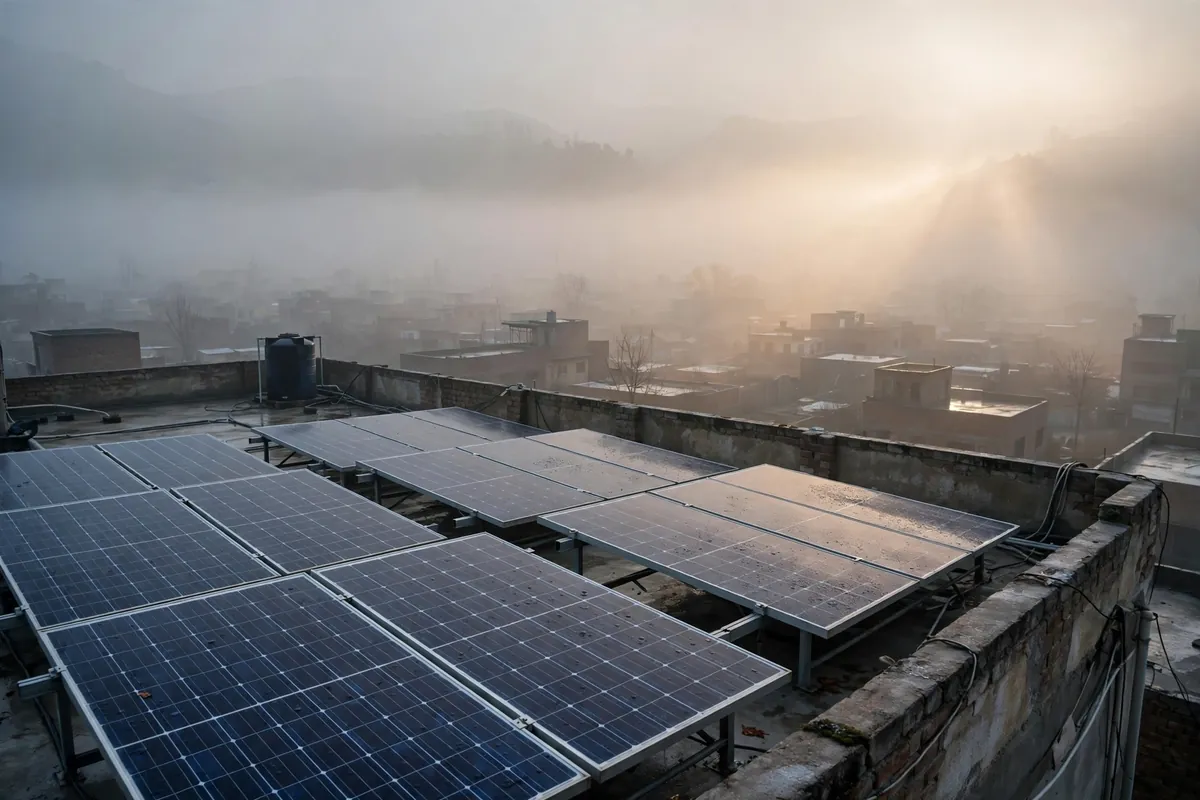
Table of Contents — Tap to Jump to a Section
Does cold weather help or hurt solar panels? It helps. Panels convert sunlight more efficiently when they are cool. Extreme summer heat actually reduces panel efficiency. So a clear, cold winter day produces strong output per sunlight hour. There are simply fewer of those hours.
Why Winter Output Drops in Peshawar
Four factors shrink your winter generation. None of them damage your system. All of them are predictable.
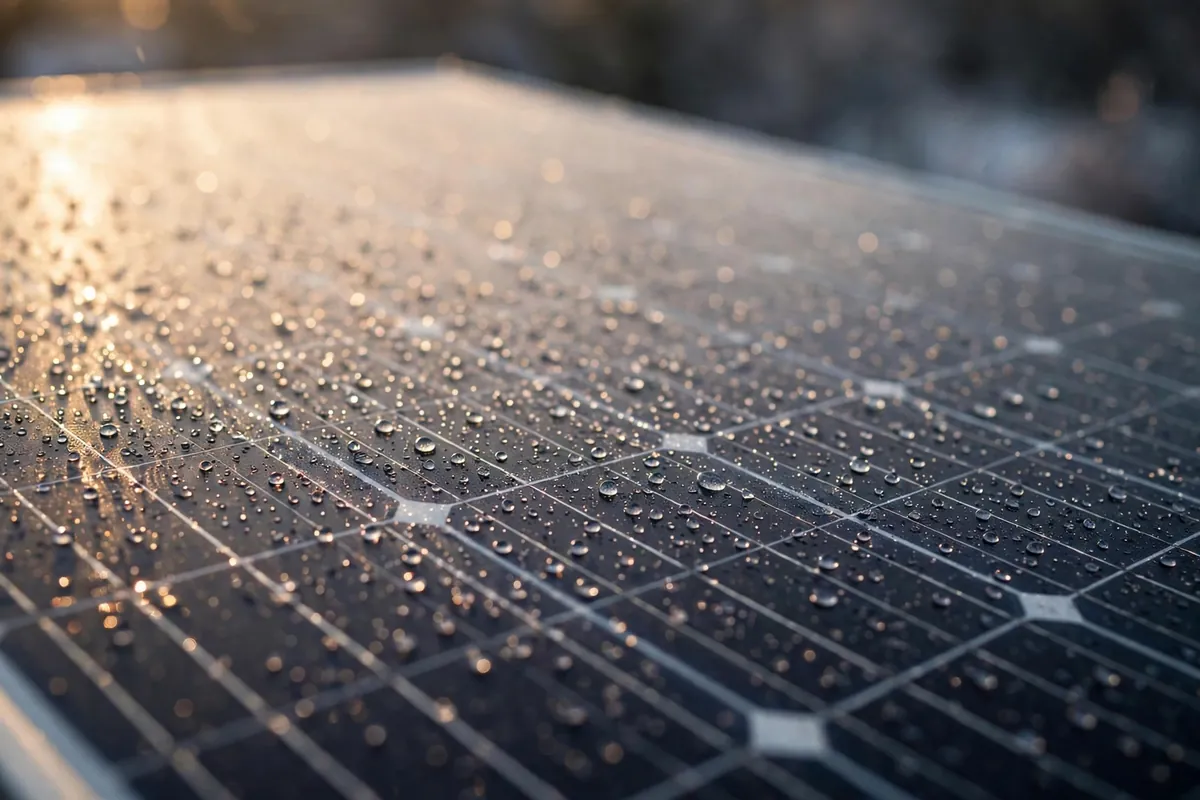
Peshawar’s winter has its own character. Cold air traps smoke near the ground. Traffic on GT Road and Ring Road adds exhaust. Brick kilns on the city outskirts add soot. Construction dust from new housing schemes settles on everything. Your panels face all of it. This is why winter cleaning matters more here than in cleaner cities.
Shorter days. Peshawar gets around 10 hours of daylight in December versus about 14 in June . Fewer daylight hours mean fewer generating hours. This alone explains most of the winter drop.
Lower sun angle. In winter the sun travels a lower path across the sky. Sunlight hits your fixed panels at a shallower angle. It passes through more atmosphere before reaching them. Less intense light reaches the cells.
Fog. December and January bring dense morning fog to Peshawar and the surrounding plains. Heavy fog can cut panel output by 30% to 70% while it lasts. The good news: fog usually burns off by late morning. That is before your panels hit their most productive midday hours.
Smog and dust film. Winter smog leaves a fine sooty layer on panels. Regional research found heavy air pollution cuts sunlight reaching panels by up to 30%. This applies to the most polluted urban areas. Dust settling on the glass adds further losses. Studies show uncleaned dust alone can cut efficiency by up to 20%.
Can fog stop solar panels completely? No. Panels generate from diffuse daylight that filters through fog and cloud. Even on the gloomiest winter day, your system produces something. On heavy overcast days, expect roughly 10% to 25% of normal output. Only true darkness stops a panel.
Month-by-Month: What Peshawar Systems Typically Generate
The table below shows a typical generation pattern for a well-installed Peshawar system. Figures are percentages of peak summer output. Treat these as illustrative estimates . Your exact numbers depend on panel brand, tilt, shading, and cleaning habits.
| Month | Typical generation (% of peak) | Main factor |
|---|---|---|
| January | 50–60% | Fog, short days, smog |
| February | 60–70% | Fog lifting, days lengthening |
| March | 75–85% | Clear skies, mild temperatures |
| April | 85–95% | Strong sun, moderate heat |
| May | 95–100% | Peak season begins |
| June | 100% | Longest days (heat slightly trims efficiency) |
| July | 90–95% | Monsoon clouds, high heat |
| August | 90–95% | Monsoon tail, humidity |
| September | 90–95% | Clearing skies |
| October | 80–90% | Pleasant weather, shorter days |
| November | 65–75% | Smog season starts |
| December | 50–60% | Shortest days, dense fog |
Two things stand out. First, winter generation roughly halves compared to June — it does not collapse to zero. Second, spring and autumn are Peshawar’s sweet spots. You get strong sun without extreme heat.
How Fog and Smog Affect Output: The Real Numbers
| Condition | Typical output vs clear day | Notes |
|---|---|---|
| Clear winter day | 70–80% of summer peak | Cold air boosts per-hour efficiency |
| Light haze | 50–70% | Common on smoggy winter afternoons |
| Dense morning fog | 30–50% | Usually burns off by late morning |
| Heavy overcast | 10–25% | Rare in Peshawar winter; more common in monsoon |
Fog looks dramatic but its annual impact is small. It strikes in the morning, when panels would produce less anyway. By midday — the highest-value generating hours — the sun is usually through. Smog is the steadier thief. It rarely blocks the sun dramatically on any single day. But its grime film builds up week after week unless you clean.
How can you tell smog film from ordinary dust? Wipe a finger across the panel glass. Grey-brown dust means ordinary soiling. A dark, greasy smear means soot. Soot needs soap; dust needs only water. Check the lower panel edges too. Grime collects there first, where dew gathers overnight.
Does Winter Generation Still Cover Your Bill?
Here is the part most winter-worry articles skip: your winter electricity bill is also lower. No air conditioners run in December. Fans sit idle. Heaters mostly run on gas. So while your panels generate less, your home consumes less too.
Net metering balances the seasons. Your system overproduces in spring and summer. It builds export credits with PESCO. Those credits offset the leaner winter months. Think of net metering as a seasonal battery — free of cost, maintained by the grid.
Do I need a bigger system just because of winter? For most homes, no. Installers in Peshawar size systems against your annual consumption, not your worst month. Oversizing for December alone means paying for capacity you barely use the rest of the year. The exception: homes with heavy winter electric heating. Mention your winter usage honestly during the site survey. The design should reflect reality.
Winter Maintenance: Keeping Output High
Winter is when cleaning matters most. Short days mean every photon counts. Smog film steals a little more each week.
| When | Task |
|---|---|
| November | Pre-winter deep clean; note your monitoring app baseline |
| December–January | Clean panels every 2–3 weeks; morning fog leaves residue |
| February | Clean once; inspect for winter grime buildup |
| Year-round | One professional inspection of wiring and structure |
Clean early in the morning or in the evening when panels are cool. Cold water on hot glass can cause thermal shock. Plain water and a soft brush handle most winter grime. Near GT Road or Ring Road, a drop of mild soap cuts the sooty film. Rinse thoroughly afterwards.
Watch your monitoring app weekly in winter. A sudden drop on a clear day signals dirt, new shade, or a fault. Seasonal decline is gradual — sharp drops are not.
Should I change my panel tilt for winter? Most Peshawar homes use a fixed tilt year-round, and that is fine. Seasonal tilt adjustment adds only a small gain. It also risks improper re-fixing. A good fixed angle, set at installation for your latitude, serves you well in all twelve months.
Is Winter a Good Time to Install Solar?
Surprisingly, yes. Summer is peak season — installers are overloaded, and waiting lists grow. In winter, crews are more available and installations happen faster. Your system is then fully tested and net-metered before the brutal summer bills arrive. Installing in December means you start banking export credits through spring. That beats racing to finish before the June heat.
There is one more winter advantage. Net metering applications filed in winter often process before the summer rush. DISCO offices handle fewer applications in December and January. Your bidirectional meter may arrive sooner. That means you enter summer with credits already building.
Frequently Asked Questions
Do solar panels work on foggy days in Peshawar?
Yes. Panels generate from diffuse light that passes through fog. Dense fog cuts output significantly while it lasts, but Peshawar’s winter fog usually clears by late morning. Your system still produces meaningful power across the day.
Does cold weather damage solar panels?
No. Panels are built for temperature swings and perform more efficiently in cool weather. What reduces winter output is shorter days and weaker sunlight, not the cold itself.
How often should I clean panels in Peshawar winter?
Every two to three weeks during December and January, when smog film builds up fastest. In cleaner months, monthly cleaning is enough. Always clean in the cool morning or evening hours.
Will my winter electricity bill be zero?
Probably not zero, but it should stay low. Winter generation is roughly half of summer peak, yet winter consumption also falls since cooling loads disappear. With net metering credits from sunnier months, many households see minimal winter bills.
Should I worry about winter before buying solar?
No. Size your system for the full year, keep panels reasonably clean, and let net metering balance the seasons. Winter is a predictable, manageable dip — not a reason to delay going solar.
Is winter a good time to buy solar in Peshawar?
Yes. Installers have shorter waiting lists, your system gets commissioned calmly, and it is ready before summer’s high bills. You also start earning export credits through spring’s excellent generation months.