10kW Solar System for 1 Kanal House in Peshawar: Complete Guide
10kW Solar System for 1 Kanal House in Peshawar: Complete Guide
A 1 kanal house is a big home: usually 5–6 bedrooms plus a drawing room, lounge, and large kitchen. Most kanal homes in DHA Peshawar, Hayatabad, and University Town run 4+ air conditioners in summer. They also run deep freezers, water pumps, and motors.
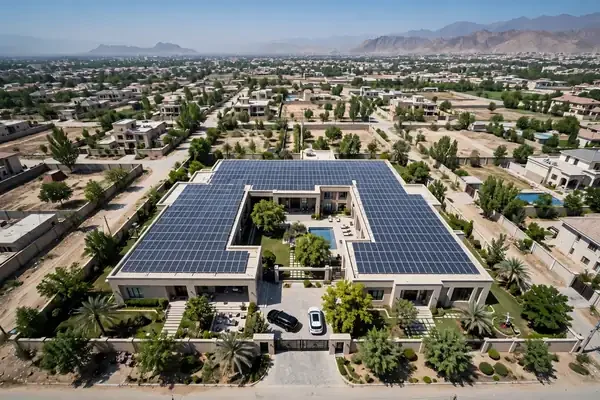
Table of Contents — Tap to Jump to a Section
A small system cannot serve this load. A 3kW or 5kW setup will trip under a kanal home’s peak demand. That is why 10kW is the standard recommendation. This guide to 10kW solar for a 1 kanal house in Peshawar covers load math, roof space, and options.
Step 1: The Load Calculation for a Kanal Home
Never size by guessing. List every appliance with its wattage and daily running hours — this is how professionals size a kanal system.
Here is a typical 1 kanal home load in Peshawar:
| Appliance | Typical Wattage | Qty | Running Together (W) |
|---|---|---|---|
| 1.5-ton inverter AC | 1,200W | 4 | 4,800W |
| Deep freezer | 250W | 1 | 250W |
| Refrigerator | 200W | 1 | 200W |
| Water pump (1 HP) | 750W | 1 | 750W |
| Ceiling fans | 75W | 8 | 600W |
| LED lights | 15W | 20 | 300W |
| LED TV + router | 150W | 1 | 150W |
| Washing machine | 500W | 1 | 500W |
| Iron | 1,000W | 1 | 1,000W |
| Peak simultaneous load | ~8,550W |
A kanal home can easily touch 8–9kW at peak. Four ACs plus a pump plus an iron add up fast. A 10kW inverter handles this with headroom; a 5kW inverter would overload and shut down.
Your load may differ. Count your own appliances and check your last 12 PESCO bills. A home using around 1,300 units a month generally needs about 10kW — matching published Punjab sizing benchmarks.
Is 10kW enough for a 1 kanal house? For most kanal homes, yes. It covers 4–5 inverter ACs plus normal daytime load. If you run 6+ ACs all day, ask about 12–15kW. The bill never lies — size from the bill, not the house size.
How Many ACs Can a 10kW System Run?
This is the most asked question by kanal homeowners, and the honest answer has two parts: daytime and nighttime.
In good daytime sun, a 10kW system can run about 4–6 inverter ACs together, plus fans and lights. Each 1.5-ton inverter AC draws about 1,000–1,500W once the room is cool. The system covers that comfortably at midday.
But output follows the sun. Mornings, late afternoons, and hazy monsoon days give less power. ACs also draw more when starting up. Stagger start times — do not switch on all four at the same minute.
At night, panels produce nothing. An on-grid 10kW system gives zero backup after sunset — ACs then run on PESCO grid or batteries. A hybrid system can run selected loads at night. But batteries big enough for 4 ACs all night cost a fortune. Most owners back up 1–2 bedrooms, not the whole house.
How many ACs can I run on 10kW at night? On batteries alone, plan for 1–2 inverter ACs plus light loads. Running 4 ACs all night needs a very large bank. Be honest about nighttime needs during the survey.
How Many Panels Fit on a Kanal Roof?
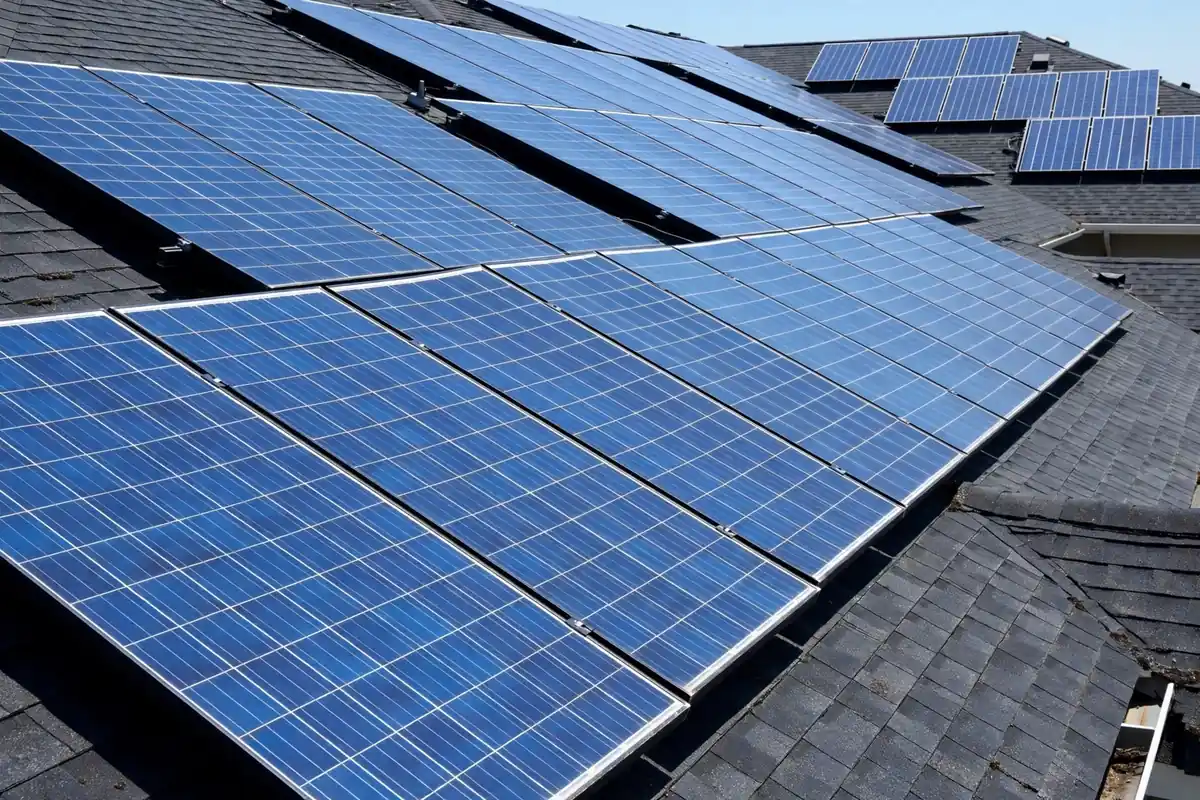
A 10kW system needs about 16–18 modern panels: 18 × 585W gives 10.53kW of DC capacity, while 16 × 650W gives 10.4kW.
Each panel measures roughly 2.3 × 1.1 metres. A 1 kanal plot is about 4,500 square feet, so the roof usually offers plenty of space. But usable space is less than total space.
Watch for roof obstacles: the mumtee (stair tower) casts shade, water tanks block rows, and parapet walls shade low panels in winter. Neighbouring houses in Tehkal or Saddar can shade part of the roof. Your installer must map shade before finalizing the layout.
An elevated structure lifts panels above the mumtee shadow line and leaves space underneath for cleaning and airflow. Airflow matters in Peshawar’s heat — hot panels produce less. A raised structure keeps them cooler and easier to wash.
You need about 45–50 sqm of clear roof for 16–18 panels. Face them true south at roughly 20 degrees of tilt. Map shade from the mumtee, tanks, parapets, and neighbour buildings. Choose an elevated galvanized structure for airflow and easy cleaning. Leave room for 2–4 extra panels if you may upsize later.
Can I add more panels to my 10kW system later? Usually yes, within limits. The inverter has a maximum DC input. A 10kW hybrid inverter often accepts 12–13kW of panels. Confirm the inverter’s max PV input before buying. Also leave physical roof space for extra rows.
On-Grid vs Hybrid: Which Suits a Big Kanal Home?
Kanal homeowners face this choice more than anyone: the house is big, the load is heavy, and outages hurt more. Here is the honest comparison.
| Factor | 10kW On-Grid | 10kW Hybrid |
|---|---|---|
| Approximate price band (Pakistan, 2026) | Rs 1.2M – 1.5M | Rs 1.6M – 2.2M+ with batteries |
| Backup during load shedding | None — system shuts down | Yes — batteries power essential circuits |
| Night-time AC use | Grid only | 1–2 ACs on batteries, rest on grid |
| Net metering export | Full export allowed | Full export allowed |
| Battery replacement cost | None | Lithium banks need replacement after 10–15 years |
| Best for | DHA/Hayatabad with stable supply | Areas with frequent or long outages |
Recent Pakistani listings put 10kW hybrid packages between roughly Rs 970,000 and Rs 1,185,000 before batteries and extras. Final price depends on panel brand, inverter, structure, and battery size. Get it itemized in writing.
Choose on-grid if your PESCO feeder is reliable — maximum export credits, lowest cost. Choose hybrid if outages disrupt your home or office. The battery bank is expensive but buys real comfort.
Many kanal owners pick a middle path: a hybrid inverter with a modest bank backing up 1–2 bedrooms, Wi-Fi, and lights. The rest runs on solar by day and grid by night. This keeps battery cost sane while covering the essentials.
Hybrid or on-grid for a kanal home? Ask yourself: how many hours of load shedding does your area face weekly? In Hayatabad, DHA Peshawar, and University Town, supply is fairly stable — on-grid with net metering often wins. Where outages run longer, hybrid pays for itself in comfort from day one.
Net Metering Sizing Rules You Must Know
Net metering lets you export extra daytime units to PESCO and earn bill credits. For a 10kW kanal home, it is almost always worth it. But there are rules.
System size generally cannot exceed your sanctioned PESCO load. If your sanctioned load is 5kW, a 10kW application may face trouble. Many kanal homes already have 10kW+ sanctioned load — check your bill or contact the subdivision office.
You also need a three-phase meter for net metering. Most kanal homes already have one. The inverter must be a net-metering-approved model that supports grid export. Your installer handles the DISCO filing, load-flow diagram, and green meter coordination.
Approval takes time: Pakistani installers report 2.5 to 3.5 months after installation. Your system saves from day one through self-consumption; export credits start once the green meter is installed.
Can I export to the grid with a 10kW system? Yes, once net metering is approved. Daytime surplus flows to the grid and offsets your bill. Just confirm your sanctioned load covers 10kW first. Do not assume. Check the bill or ask PESCO. net metering in Peshawar
What a 10kW System Produces Each Month
Production changes with the seasons. Published PVGIS data for Punjab gives about 1,570 units per kW per year. That is roughly 15,700 units a year for 10kW. Peshawar’s sunny climate tracks close.
| Month | Approximate 10kW Output |
|---|---|
| January | ~1,160 units |
| February | ~1,210 units |
| March | ~1,470 units |
| April | ~1,510 units |
| May | ~1,520 units |
| June | ~1,380 units |
| July (monsoon) | ~1,190 units |
| August (monsoon) | ~1,200 units |
| September | ~1,250 units |
| October | ~1,380 units |
| November | ~1,230 units |
| December | ~1,200 units |
Two patterns matter. Output dips in July–August with monsoon clouds — exactly when AC use peaks. Size expectations for cloudy months, not sunny ones. December–January dips matter less, since winter AC load is zero.
Dust is Peshawar’s quiet output killer — a dusty panel can lose 10–18% of output. Clean panels every 2–3 weeks in dusty months; homes near Ring Road, GT Road, or construction zones need more frequent washing.
For detailed 10kW package options, see our 10kW solar system in Peshawar page.
Frequently Asked Questions
How much roof space does a 10kW system need?
About 45–50 square metres of clear, unshaded roof for 16–18 modern panels. A kanal roof almost always has enough space. The real constraint is shade from the mumtee, tanks, and parapets. A shade survey matters more than total roof size.
Can a 10kW system run 4 air conditioners at night?
Not on solar alone — panels produce nothing at night. On hybrid, a battery bank can run 1–2 inverter ACs through the night. Running all 4 all night needs a very large, expensive bank. Most owners back up selected bedrooms, not the whole house.
What battery size suits a 10kW hybrid system?
It depends on your nighttime load. A 5kWh lithium bank supports light essentials for a few hours — not heavy AC use all night. Tell your installer exactly which appliances must run during outages, and size the bank from that list.
How long does net metering approval take in Peshawar?
Typically 2.5 to 3.5 months after installation, covering DISCO filing, inspection, and green meter installation. Your system saves from day one through daytime self-consumption; export credits begin after the green meter goes live.
Is 10kW too big if my bill is only Rs 20,000?
Probably yes. A Rs 20,000 monthly bill suggests roughly 400–500 units. A 5kW solar system in Peshawar may cover that fully. Oversizing wastes money — size from your 12-month bill average, not your neighbour’s system.
Should I choose 10kW or 12kW for my kanal house?
Start from your load and bill. If peak load stays under 9kW and the bill averages under 1,400 units, 10kW is the sweet spot. For 5–6 daily ACs or a planned EV charger, discuss 12–15kW. The survey decides, not the showroom.
Get Your Kanal Home Surveyed Properly
A kanal home deserves a proper survey, not a WhatsApp guess. Zain Solar System visits your home in DHA Peshawar, Hayatabad, University Town, Regi Model Town, or Warsak Road. We map your roof shade. We study your PESCO bill. We calculate your real peak load. Then we design the 10kW system your house actually needs.
Book a free site survey today. Message us on WhatsApp at 0301-5905082. Get an itemized written quote with every panel, cable, and warranty year listed. Big home, big system, zero guesswork.