DHA Peshawar: New Home Solar Planning Guide
DHA Peshawar: New Home Solar Planning Guide
Building a new home in DHA Peshawar is the perfect time to plan solar. Pre-wiring during construction costs a fraction of retrofit work later. A planned system also looks cleaner and performs better. This guide covers solar for new house DHA Peshawar projects step by step. You will learn what to wire, where to place equipment, and when to apply for net metering. Follow it and your home will be solar-ready from day one.
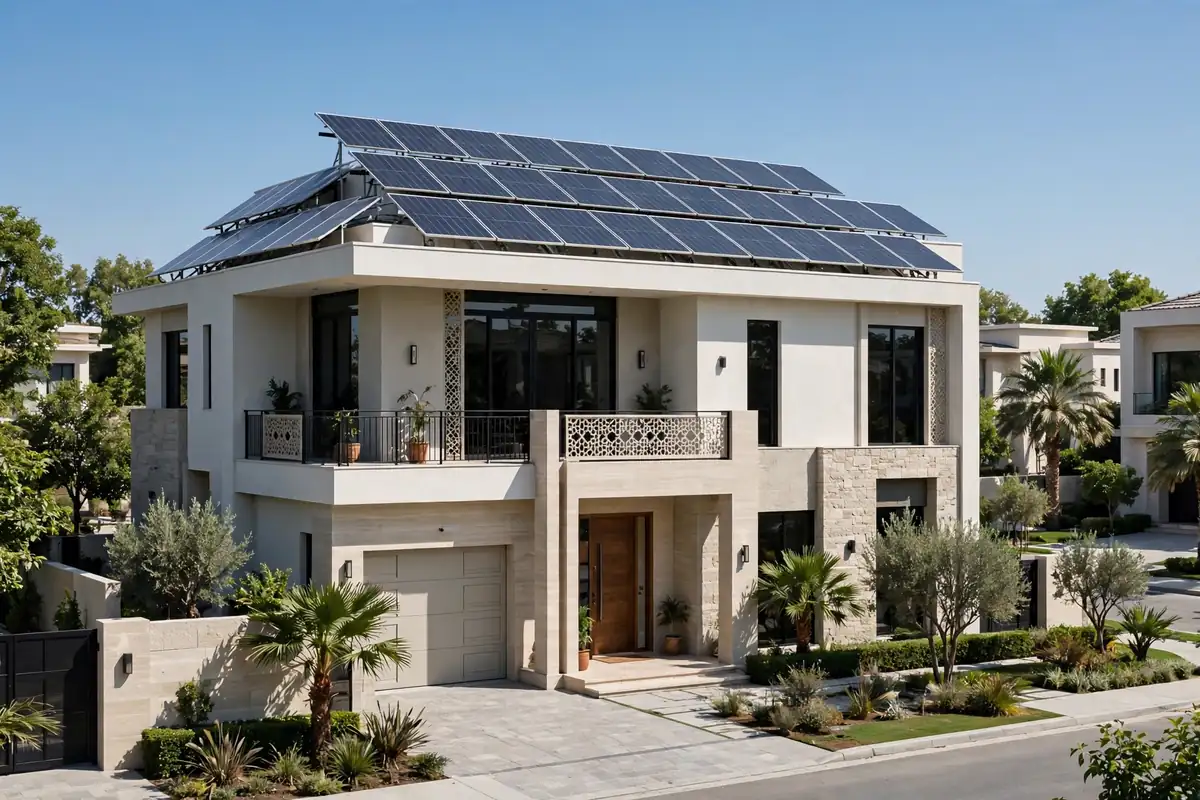
Table of Contents — Tap to Jump to a Section
- 01Why New Builds Save Serious Money Over…
- 02Construction-Stage Solar Checklist
- 03Pre-Wiring: The One Thing You Cannot Skip
- 04Designing the Inverter Room
- 05Roof and Structure Design for Maximum…
- 06Sizing Right: How Much Solar Does a DHA…
- 07Sanctioned Load Planning with PESCO
- 08Net Metering Application Timing
- 09FAQs
Why New Builds Save Serious Money Over Retrofits
Retrofitting solar on a finished home means cutting walls and ceilings. Electricians chase new conduits through painted walls. That repair and repaint work adds Rs 50,000 to Rs 100,000. Planning during construction avoids all of it. Anyone comparing solar for new house DHA Peshawar quotes should price pre-wiring separately.
Underground conduits go in before the floor screed is poured. Cable routes run inside walls before plaster. The distribution board gets a dedicated solar section from the start. Everything stays hidden, neat, and safe. Retrofit jobs always show surface-mounted pipes somewhere.
Here is a realistic cost comparison for the same 10kW system.
| Cost Item | Planned During Construction | Retrofit After Completion |
|---|---|---|
| Conduit and cable routing | Rs 25,000 | Rs 80,000 |
| Wall cutting and repair | Rs 0 | Rs 40,000 |
| Repainting damaged areas | Rs 0 | Rs 25,000 |
| Distribution board upgrade | Rs 15,000 | Rs 45,000 |
| Extra labor days | 0 days | 3-4 days |
| Total extra cost | Rs 40,000 | Rs 190,000 |
Estimates for DHA Peshawar homes. Confirm with your contractor.
Planning ahead saves roughly Rs 150,000 on a 10kW project. It also saves a week of dust and disruption.
There is a performance benefit too, not just cost. Conduit routes planned early take the shortest path. Shorter DC cable runs mean lower voltage drop. Lower voltage drop means more units from the same panels.
Construction-Stage Solar Checklist
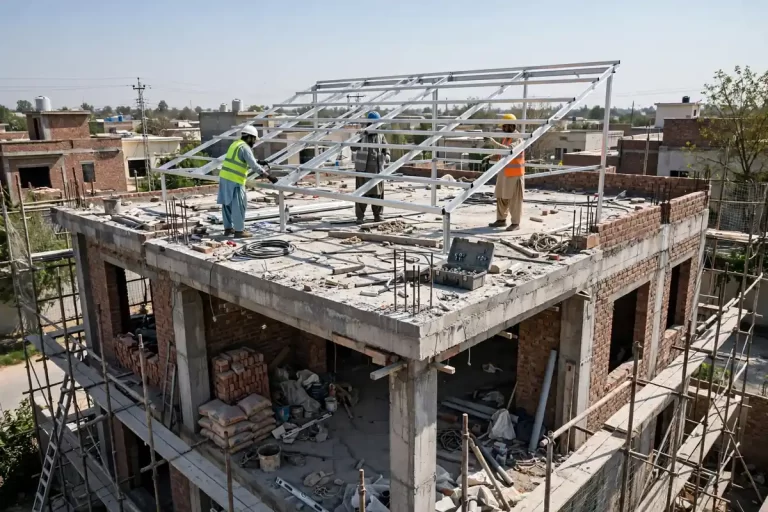
Solar planning touches four construction stages: grey structure, electrical rough-in, roofing, and finishing. Miss a stage and you pay retrofit prices later. Use this checklist with your architect and electrician.
| Construction Stage | Solar Task | Who Does It |
|---|---|---|
| Foundation and grey structure | Reserve inverter room space near main DB | Architect |
| Brickwork stage | Leave 4-inch ducts from roof to DB room | Mason |
| Electrical rough-in | Lay empty PVC conduits for DC and AC cables | Electrician |
| Roof slab pouring | Install anchor sleeves for structure bolts | Contractor |
| Roof finishing | Waterproof around anchor points properly | Waterproofer |
| Plaster and paint | Mark conduit routes on as-built drawings | Electrician |
| Finishing stage | Install dedicated solar breakers in DB | Electrician |
| Before possession | Apply for PESCO net metering | Homeowner + installer |
Start the conversation with your architect before the drawings are final. Show them where panels will sit on the roof plan. Mark the inverter room on the ground floor plan. A good architect in DHA has done this before. Ask to see a previous solar-ready project.
How long does solar installation take? The panel and inverter work takes 3 to 4 days for 10kW. But pre-wiring spreads across your construction timeline. Net metering approval runs separately and typically takes 30 to 90 days. Plan the application two months before you move in.
Keep an as-built drawing of every conduit route. Your solar installer will thank you years later. It also helps future electricians avoid drilling into hidden cables.
Pre-Wiring: The One Thing You Cannot Skip
Pre-wiring means laying empty conduits before walls close up. These pipes carry DC cables from roof to inverter later. Skipping this step is the costliest mistake in new construction. Everything else can be adjusted, but conduits cannot.
Run two separate 1.5-inch PVC conduits from the roof to the inverter room. One carries positive and negative DC strings. The other stays spare for future expansion. Can I increase system size later? Yes, and that spare conduit makes it cheap. Without it, expansion means cutting walls again.
Also run a conduit from the inverter room to the main distribution board. This carries the AC output cable to your home circuits. Size it at 1.5 inches for a 10kW system. Keep DC and AC conduits at least 6 inches apart. This separation reduces electrical interference and meets safety norms.
Label both ends of every conduit clearly. Use permanent marker on the pipe and a photo record. Electricians change during long projects in DHA. Labels survive crew changes, memory does not. This tiny habit prevents expensive confusion at installation time.
Ask your electrician to leave draw wires inside each conduit. A simple nylon string works perfectly.
Designing the Inverter Room
The inverter room houses your inverter, batteries, and protection devices. It needs planning because inverters are large and need airflow. A 10kW hybrid inverter is roughly the size of a small cupboard. Batteries add another two to four feet of wall space.
Place the inverter room on the ground floor near the main distribution board. Short cable runs between DB and inverter save money. A store room or utility area next to the garage works well.
The room needs ventilation but not air conditioning. Inverters shut down or derate in extreme heat. A ventilated room in Peshawar summer stays under 40 degrees. Add a small exhaust fan on a thermostat for safety.
Plan one dedicated 32-amp breaker slot in the DB for solar input. Plan another for the changeover switch wiring. Tell your electrician these slots are reserved for solar. Mark them on the DB schedule sheet. This avoids a DB replacement when solar goes in.
Leave wall space for a future battery bank even if you skip batteries now. A 48V lithium bank needs about 3 by 2 feet of floor or wall. Mark that space on the room plan today. Do I need a battery for net metering? No, net metering works fine without batteries. But reserving space keeps your options open for later.
Roof and Structure Design for Maximum Generation
DHA Peshawar roofs are usually flat RCC slabs with parapet walls. That is ideal for solar structures. Plan the panel layout on the roof drawing before construction ends. This prevents clashes with water tanks, stairs, and mumties.
Reserve the south-facing portion of the roof for panels. In Peshawar, panels face true south for maximum yield. A 10kW system needs about 550 to 600 square feet of shadow-free area. Keep water tanks and stair bulkheads on the north side. Their shadows fall away from the panels.
Raise the mumty and tank platform walls before panel layout is fixed. Even a small shadow across one panel string cuts output. Morning and evening shadows matter most in winter. Walk the roof at 9am and 3pm to check shadows. Do this check in December when the sun sits lowest.
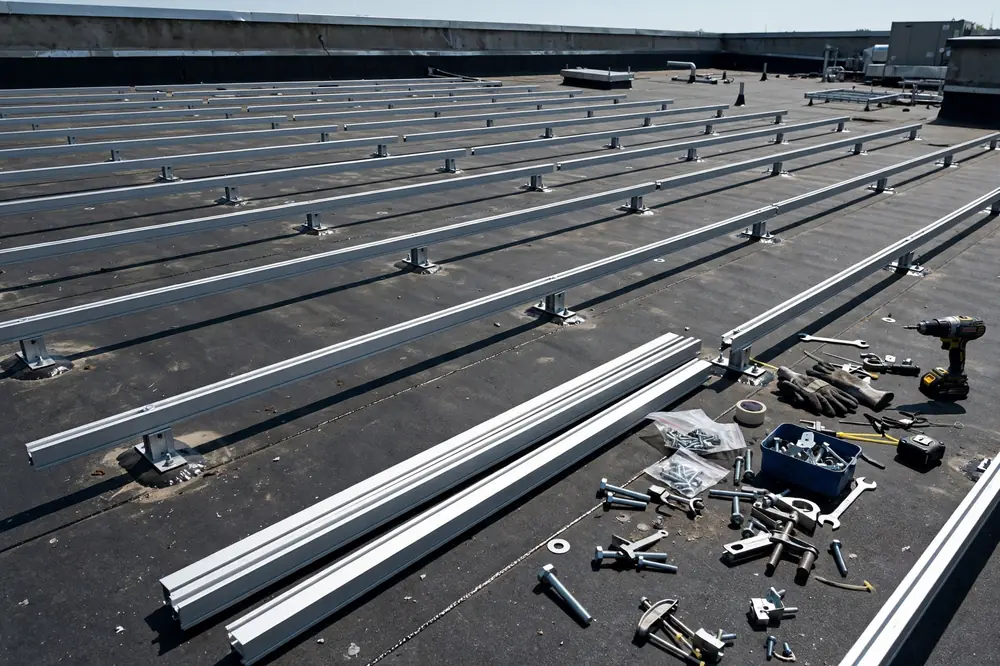
Install anchor sleeves during the roof slab pour, not after. These are short steel pipes cast into the concrete. Structure columns bolt into them later without drilling. Drilling into a finished, waterproofed roof risks leaks. Sleeves placed during the pour cost almost nothing.
Waterproof around every anchor point with proper membrane. Peshawar monsoon rain finds every weak spot. A leaking anchor bolt ruins ceilings below. Your waterproofer should seal sleeves as part of the roof treatment. Mention solar anchors in the waterproofing scope explicitly.
Sizing Right: How Much Solar Does a DHA Home Need
DHA Peshawar homes run larger than average Hayatabad houses. Plot sizes of 10 marla, 1 kanal, and 2 kanal are common. Bigger homes mean more ACs, bigger pumps, and higher bills. Size your system for the finished home, not the construction site.
| Home Size in DHA | Typical ACs | Monthly Units | Recommended System |
|---|---|---|---|
| 7-10 marla | 3-4 | 700-1,000 | 8kW |
| 1 kanal | 5-6 | 1,000-1,500 | 10kW |
| 2 kanal | 7-9 | 1,500-2,200 | 15kW |
A 10kW system produces 40 to 48 units daily in Peshawar sun. That is 1,200 to 1,440 units per month. It comfortably covers a 1 kanal home with 5 to 6 ACs. It also leaves room for an electric geyser or future EV charger.
Do not size only for today if you plan to grow. Families add ACs, deep freezers, and water heaters over years. Oversizing by 20 percent now is cheaper than expanding later. But net metering approval must match your installed capacity. Size once, approve once, and avoid repeat paperwork.
Match the inverter to your final planned size, not the starting size. A 10kW inverter can run 8kW of panels today. You add the remaining panels when budget allows. This staged approach spreads cost without new approvals. Confirm the staged plan with your installer in writing.
Is net metering worth it in 2026? Absolutely, for DHA-size bills. A 1 kanal home can export 400-plus units monthly in spring. Those credits offset heavy summer night usage. The net metering fee pays back within months at this scale.
Sanctioned Load Planning with PESCO
PESCO limits your solar size to your sanctioned load. A 10kW system needs at least 10kW sanctioned load. Many new DHA homes get 5kW sanctioned load by default. That blocks a 10kW net metering approval.
Apply for load enhancement early in construction. The application goes to your local PESCO subdivision office. Processing typically takes 30 to 90 days in Peshawar. Your electrician or installer can guide the paperwork. Do this before the net metering application, not after.
Higher sanctioned load slightly raises your fixed monthly charges. But it unlocks the full solar capacity your home needs. The solar savings dwarf the small fixed-charge increase. This is standard practice for DHA homes with central air conditioning.
Keep copies of every PESCO receipt and approval letter. Net metering files reference your sanctioned load documents. Missing papers delay approval by weeks. A simple folder with all PESCO documents saves real headaches.
Net Metering Application Timing
Timing the net metering application right avoids idle months. Apply too early and the meter sits unused. Apply too late and you export units without credit. The sweet spot is two months before possession.
PESCO approval in Peshawar typically takes 30 to 90 days. File when your electrical work is 80 percent complete. The inspection needs a finished DB and earthed system. Your installer coordinates the inspection visit. They also prepare the single-line diagram PESCO requires.
Your system can run before the bi-directional meter arrives. It powers your home loads directly from day one. Only the export credit waits for the new meter. So there is no downside to an early installation. Get panels up as soon as the roof is ready.
Choose your installer before construction finishes, not after. A good installer reviews your pre-wiring during construction. They catch mistakes while walls are still open. Zain Solar System offers free pre-wiring consultation for DHA builds. One site visit during construction prevents costly rework.
Frequently Asked Questions
How much does a 5kW solar system cost in Pakistan?
Between Rs 780,000 and Rs 1,250,000 in 2026. DHA new builds usually need 8kW to 15kW systems. A 10kW setup costs roughly Rs 1,185,000 to Rs 2,500,000. Pre-wiring during construction keeps these figures at the lower end.
How long does solar installation take?
Panel and inverter installation takes 3 to 4 days for a 10kW system. Pre-wiring happens gradually during your construction timeline. PESCO net metering approval typically adds 30 to 90 days. Start the application two months before moving in.
Can I increase system size later?
Yes, adding panels later is straightforward with planned conduits. Your inverter should already match the bigger size. Net metering needs re-approval for the increased capacity. Plan the final size now to avoid double paperwork.
Do I need a battery for net metering?
No, net metering works without any batteries. It suits on-grid and hybrid inverters equally. Batteries only provide backup during load shedding. Reserve wall space now and decide on batteries later.
What is the new net billing export rate?
About Rs 11 to Rs 13 per unit under 2026 rules. The old rate was Rs 22 to Rs 27 per unit. Self-consumption now beats exporting for savings. Run heavy appliances during sunshine hours for maximum benefit.
Is planning solar during construction really worth it?
Yes, it saves around Rs 150,000 on a 10kW project. It also gives cleaner wiring and better system performance. Retrofit work after possession causes dust, damage, and repaint costs. One planning meeting with your architect covers most of it.
Get Free Pre-Wiring Consultation for Your DHA Build
Building in DHA Peshawar happens once, so plan the solar wiring right the first time. Smart solar for new house DHA Peshawar planning starts with one site visit. A single site visit during construction saves lakhs in retrofit costs later. Zain Solar System offers free pre-wiring consultation for new DHA Peshawar homes. We review your drawings, mark conduit routes, and size your future system. When construction finishes, we install and handle your PESCO net metering. Message us on WhatsApp at 0301-5905082 today. Let’s make your new home solar-ready from day one.