7 Solar Scams in Peshawar & How to Avoid Them
7 Solar Scams in Peshawar & How to Avoid Them
Solar is one of the best investments a Peshawar homeowner can make. But the local market has a dark side. The Pakistan Solar Association has warned publicly about B-grade and substandard panels flooding the country. In 2024, a LONGi official spoke to Pakistani media. He said traders were passing off B-grade and C-grade panels as A-grade products. This is not a rumor. It is documented.
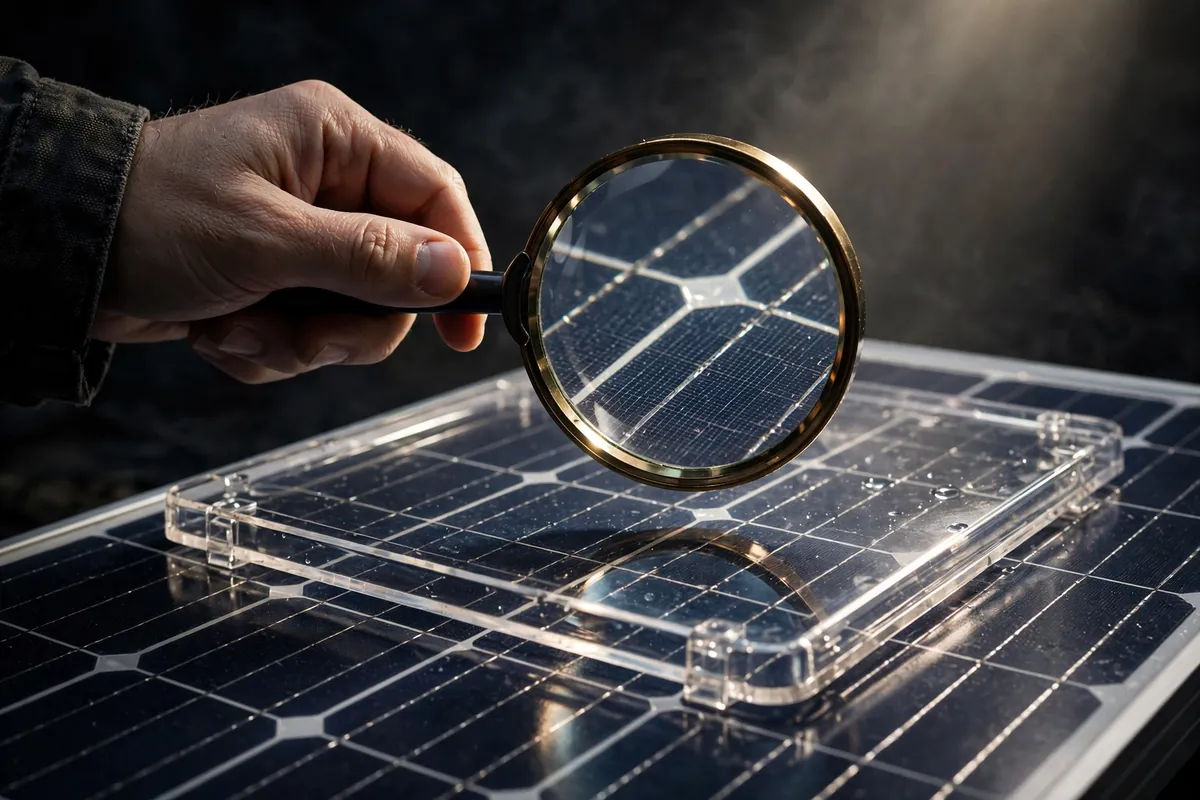
Table of Contents — Tap to Jump to a Section
- 01Scam 1: B-Grade Panels Sold as A-Grade
- 02Scam 2: Undersized Systems — Fewer Watts…
- 03Scam 3: Fake Warranties That Vanish When…
- 04Scam 4: Inflated Net Metering Charges and…
- 05Scam 5: The Disappearing Installer After…
- 06Scam 6: Grey-Market and Counterfeit Panels
- 07Scam 7: Cheap, No-Name, or Wrong Inverters
- 08Your Verification Tables: Keep These Handy
- 09FAQs
The good news: every common scam has a simple check. This guide covers the seven tricks seen most in Peshawar. From Karkhano market grey imports to disappearing installers, you get exact protection steps for each. These are the most common solar scams Pakistan buyers report. You do not need technical knowledge. You need ten minutes and the right questions.
Scam 1: B-Grade Panels Sold as A-Grade
This is the most common of all solar scams Pakistan homeowners face. A B-grade panel comes from a real factory but failed quality checks. Common flaws: cell defects, lower efficiency, or cosmetic damage. Honest sellers disclose this and price it lower. Dishonest sellers stick an A-grade label on it and charge full price.
How it works: assemblers buy rejected panels cheap, print premium brand stickers, and sell them as Tier-1. A Pakistani news investigation found workshops doing exactly this. They produced B-grade panels and pasted A-grade stickers on them. Your system looks fine on day one. Within a year or two, output drops, hotspots appear, and the backsheet starts peeling.
How to protect yourself: Ask for the panel’s serial number before paying. Check that the barcode is laminated inside the glass. It should not be a paper sticker on the surface. Try the fingernail test — if you can lift the barcode edge with your nail, walk away. Genuine Tier-1 barcodes sit under the glass with no edge to catch.
Are all cheap panels fake? No. Some cheap panels are old stock or lower-tier brands sold honestly. The scam is not the low price — it is the lie about what you are buying. A seller who says “these are B-grade, priced accordingly” is being honest. A seller who claims A-grade at a suspicious discount is not.
Scam 2: Undersized Systems — Fewer Watts Than You Paid For
You pay for a 10kW system. You get 9kW on your roof. Most homeowners never notice because nobody counts.
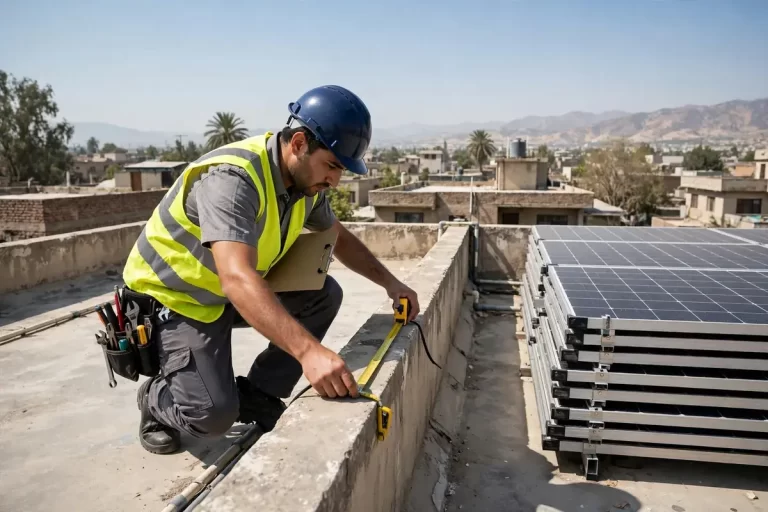
How it works: the quote says 10kW, but the installer mounts fewer panels or lower-wattage panels than promised. Eighteen 550W panels make 9.9kW. Sixteen make only 8.8kW. That missing kilowatt costs you units every single day for 25 years. Some installers quote a high panel wattage and install a lower one. They bet you will never climb up to read the label.
Can’t I just trust the installer’s word on system size? You can trust, but verify in two minutes. Count the panels and read one wattage label. Honest installers welcome the check.
How to protect yourself: Do the math yourself. Multiply the number of panels on your roof by the wattage printed on the back of each panel. Compare it with your quote. Ask the installer to show you the wattage label on one panel before mounting begins. This takes two minutes and kills this scam completely.
Scam 3: Fake Warranties That Vanish When You Claim
“Sir, 25-year warranty, 30-year warranty, lifetime warranty.” Verbal promises are free. Honoring them is not.
How it works: the installer promises a long manufacturer warranty. But he provides no warranty card, no documentation, and no claim process. When a panel fails in year three, the installer shrugs. Even genuine panels bring complicated warranty claims. One installer struggled for months to get a claim honored on certified panels. With no paperwork, you have zero chance.
Is a verbal warranty ever enough? No. If the warranty is not written on the manufacturer’s card, it does not exist. Paper beats promises every time.
How to protect yourself: Get warranty terms in writing before paying the final amount. You need the manufacturer’s warranty card, not just the installer’s word. Ask one direct question. “If a panel fails in year five, what do I do? Who pays for replacement and labor?” If the answer is vague, the warranty is vague.
Scam 4: Inflated Net Metering Charges and Fake Timelines
“We have connections inside PESCO. Approval in two weeks.” This sentence should set off alarms.
How it works: net metering approval typically takes two to four months, depending on DISCO workload and documentation. No installer controls this timeline. Scam installers charge a heavy “speed money” fee for supposed connections. Others delay filing your paperwork for months while giving excuses. Either way, your system runs without export credits and your bills stay high.
How long does net metering approval really take in Peshawar? Expect one to three months for PESCO Peshawar. Anyone promising two weeks is selling you speed, not service.
How to protect yourself: Ask for net metering charges as a separate written line item. Ask for receipts for any official fee paid to PESCO. Never pay extra for “guaranteed fast approval.” No honest installer promises a fixed date without seeing your case. Confirm the installer will file within a specific week after installation.
Scam 5: The Disappearing Installer After Advance Payment
This is the most painful scam on the list. You pay 60–70% advance. The installer delays. Then the phone stops being answered.
How it works: a smooth-talking seller collects a large advance. Then he never starts work — or installs half the system and vanishes. This pattern has been reported in multiple Pakistani cities. Once your money is gone, recovery is difficult and slow.
How to protect yourself: Keep your advance between 30% and 40%. Pay the rest in milestones. Release a portion on equipment delivery, another on installation day, and the final amount only after testing and handover. Never pay the full amount upfront. Just as important: visit the company’s physical office before signing. A real office with staff, stock, and past customers is the strongest trust signal in this market.
How can I verify a solar company is legitimate? Visit their office in person. Ask for their business registration or NTN. Ask for addresses of two or three past installations you can visit or call. A genuine company in Peshawar will happily show you working systems in Hayatabad, DHA, or University Town. A scammer will make excuses.
Scam 6: Grey-Market and Counterfeit Panels
Peshawar’s Karkhano market is the city’s solar wholesale hub. It has genuine dealers — and it has counterfeits. The same fraud documented on Lahore’s Hall Road happens here. Generic panels wear Longi, Jinko, or Canadian Solar stickers.
How it works: counterfeit panels copy the branding of Tier-1 manufacturers. They carry fake serial numbers, weak frames, and poor soldering. Some even have duplicate serial numbers across multiple panels. The panel generates power initially, then degrades fast. No manufacturer exists to honor a warranty — they never made it.
How to protect yourself: Run the fingernail test on the barcode. Check that serial numbers are unique across your panels. Look at cell alignment — crooked or uneven cells signal poor manufacturing. Buy from authorized dealers who can show distributorship proof. The cheapest quote in the market is cheap for a reason. If a “Tier-1” price is far below every other quote, it is probably not Tier-1.
Scam 7: Cheap, No-Name, or Wrong Inverters
Everyone checks the panels, but few check the inverter. Scam installers count on this.
How it works: the installer fits a locally assembled or refurbished inverter with no real warranty support. It works for a few months, then fails — and your entire system stops. One step worse: some installers fit a non-export inverter while promising net metering. The system runs, but your exported units never get credited. You lose savings every month without knowing why.
Why does the inverter matter more than people think? Panels get the attention, but the inverter runs the whole system. If it fails, every panel on your roof goes silent.
How to protect yourself: Get the inverter brand and exact model in writing on your quote. Confirm it supports grid export if you want net metering. Ask for the manufacturer’s warranty card. Confirm the monitoring app login is registered to you, not the installer. Test the app on installation day.
Your Verification Tables: Keep These Handy
| Feature | Genuine panel | Fake or low-quality panel |
|---|---|---|
| Serial number | Unique, verifiable with manufacturer | Duplicate, missing, or unverifiable |
| Barcode | Laminated inside the glass | Paper sticker you can peel |
| Warranty | Manufacturer warranty card | Verbal promise only |
| Frame | Strong aluminium, even finish | Lightweight, rough edges |
| Solar cells | Clean, uniform alignment | Crooked, cracked, or uneven |
| Junction box | Sealed, branded, tidy wiring | Loose, poor plastic, messy |
| Long-term output | Stable for 20–25 years | Drops noticeably within 1–2 years |
| Milestone | Suggested payment |
|---|---|
| Signing the agreement | 30–40% advance |
| Equipment delivered to your home | 20–30% |
| Installation complete and tested | 20–30% |
| Net metering filed, final handover | Remaining 10% |
| # | Scam | Red flag | Your verification |
|---|---|---|---|
| 1 | B-grade sold as A-grade | “Tier-1” price far below market | Fingernail test, serial verification |
| 2 | Undersized system | Quote vague on panel count and wattage | Panels × wattage math on your roof |
| 3 | Fake warranty | Verbal promises, no documents | Written warranty card, claim process |
| 4 | Net metering fraud | “Guaranteed approval in 2 weeks” | Itemized fee, official PESCO receipts |
| 5 | Vanishing installer | Demands 60–70% advance, no office | 30–40% advance, visit the office |
| 6 | Counterfeit panels | Copied branding, no-name seller | Unique serials, authorized dealer |
| 7 | Bad inverter | Brand and model missing from quote | Model in writing, app access on day one |
Frequently Asked Questions
How do I check if my solar panels are genuine?
Start with the fingernail test — genuine barcodes are laminated inside the glass and cannot be peeled. Check that every panel has a unique serial number and ask for the manufacturer’s warranty card.
How much advance is safe to pay a solar installer?
Keep it between 30% and 40%. Pay the rest in milestones tied to delivery, installation, and handover. Never pay 100% upfront.
Is it safe to buy cheap panels from Karkhano market?
Karkhano has genuine wholesalers and counterfeit sellers alike. Buy only from dealers who show authorization proof, give written warranties, and let you verify serial numbers.
What warranty should I expect on panels and inverter?
Tier-1 panels typically carry a 12-year product warranty and a 30-year performance warranty. Inverters usually carry 5–10 years. Get both in writing from the manufacturer, not just verbal assurance from the installer.
What should I do if my installer stops responding?
First, document everything — agreement, receipts, and messages. Visit their office in person. If the office is gone too, you may need legal help. Milestone payments and an office visit exist to prevent exactly this.
Do genuine panels always cost more than fake ones?
Yes — that price gap is the scammer’s profit. But genuine panels need not be the market’s most expensive option. Get three written quotes and compare; an outlier in either direction deserves questions.