ENGINEERED FOR PESHAWAR
Commercial Solar Systems in Peshawar: Cut Your Business Power Bill
Your shop opens at 9 in the morning. Your office air conditioning runs all afternoon. Your hotel never closes.
In Peshawar, business power use peaks while the sun shines brightest. That timing is your advantage. A commercial solar system turns daytime load into daytime savings.
Each unit your panels make is a unit you do not buy from PESCO. This page explains how solar for business works in Peshawar. It covers cost, savings, the 2026 rules, sizing, and installation. No jargon. Just clear answers.
300+
Installations
5.0
Rating
30 Years
Panel Warranty
itel Energy
Certified
Reason
Why solar pays back faster for a business than for a home
A home uses little power at noon. Its people are out. A business is the opposite. Shops, offices, and workshops draw their heaviest load in daylight hours. That load lines up with peak solar output. So almost every unit your system makes gets used on site. Self-use beats export.
Under the 2026 rules, exports earn less than self-used units save. That makes daytime use even more valuable. A shop that opens at 9 and closes at 8 can often skip batteries. A factory running motors all day can cut its grid bill hard. Peshawar summers cross 40 degrees. Air conditioning then eats the bill. Solar output also peaks in summer. The two match. That is why summer bills drop hardest. The result: a commercial solar system often pays back faster than a home system of the same size.
Who solar for business fits in Peshawar
If your business pays a large monthly bill and runs in daylight, a commercial solar system fits. If you run at night too, the design changes. It still works. It just needs storage or a different mix.
|
Business type |
System type |
Battery needed? |
|
Shops and plazas |
On-grid |
No |
|
Offices |
On-grid |
No |
|
Hotels |
Hybrid |
Yes |
|
Schools and colleges |
On-grid |
No |
|
Hospitals and clinics |
Hybrid |
Yes |
|
Petrol pumps |
Hybrid |
For evening hours |
|
Factories and warehouses |
On-grid or hybrid |
Depends on shifts |
|
Cold storage |
Hybrid |
Yes |
Solar for plazas and shared roofs
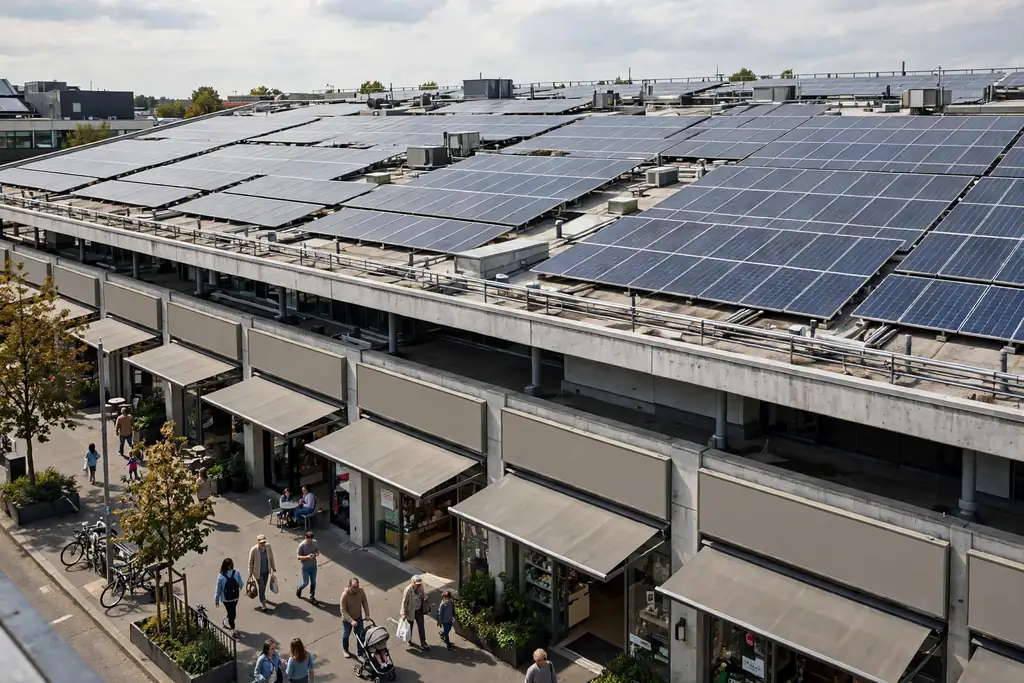
Many Peshawar shops sit in plazas. One roof serves many shops. That does not block solar.
Each shop needs its own meter and sanctioned load. We map your share of the roof. Then we size the system to your own bill. Talk to your plaza management first. We handle the technical part.
Roof strength matters. Old plaza roofs need a check first. We check load-bearing capacity on survey. Weak roofs get lighter structures or ground mounts where space allows.
What a commercial solar system costs in Pakistan
How much does a business solar system cost in Pakistan?
Published market guides put a 50kW commercial system at PKR 7–9 million. A 100kW system runs PKR 13–17 million. These are turnkey ranges. They cover panels, inverters, structure, cabling, and installation.
|
System size |
Published price range |
Best for |
|
5kW |
PKR 900,000–1.2M |
Small shops, clinics |
|
10kW |
PKR 1.6–2.2M |
Offices, restaurants |
|
50kW |
PKR 7–9M |
Plazas, factories |
|
100kW |
PKR 13–17M |
Hospitals, large factories |
Your exact price depends on four things. System size. Panel and inverter brands. Roof type and structure. Battery backup, if you add it.
Equipment rates move with the dollar. So any honest installer quotes in writing, valid for a set number of days. Ask for an itemised quote. It should name each part and its brand. A quote without brands is a guess.
Zain Solar System gives free, itemised commercial quotes in Peshawar. Send your last bill. We size it. We price it. No obligation.
How much can your business save?
How much can a business save with solar?
Daytime-heavy businesses often save 50–90% of their grid bill. Published guides for Pakistan show payback in 2.5–4 years for commercial systems. Panels last 20–25 years. After payback, your power is close to free.
|
System size |
Units per month |
Suits |
|
5kW |
600–700 |
Small shops, clinics, offices |
|
10kW |
1,200–1,400 |
Medium offices, restaurants |
|
20kW |
2,400–2,800 |
Schools, showrooms, workshops |
|
30kW |
3,600–4,000 |
Petrol pumps, hotels |
|
50kW |
6,000–7,000 |
Factories, warehouses |
These figures come from published Pakistani market guides. They assume 5–6 sun hours a day. Your roof, shading, and load change the real number. A free survey gives your exact figure.
Net billing in 2026: what changed
Your exported units sell at the national average energy purchase price. You pay your consumer tariff on imported units. The two prices differ. So self-use now matters more than export.
Key facts for businesses: NEPRA caps systems at 1 MW. System size cannot exceed your sanctioned load. Systems of 250kW or more need a load flow study. Agreements now run five years, not seven. A concurrence fee of Rs 1,000 per kW applies.
Your installer should handle the full PESCO process. Zain Solar System handles the paperwork end to end. We file it. We follow it up. You sign where needed. Check current terms with NEPRA and PESCO before you commit. Rules can change. We track them for you.
Can a business still net-meter in Pakistan?
Yes, but the rules changed. NEPRA replaced net metering with net billing in 2026. The NEPRA (Prosumer) Regulations 2026 now govern new connections.
What size system does your business need?
How is a commercial solar system sized?
From your load list, not your bill alone. List what runs and for how long. Refrigeration. Air conditioning. Lighting. Motors. Compressors. Computers.
Motors matter most. A compressor can draw several times its running power at startup. An inverter that cannot handle that surge will trip. Your trading hours matter too. They decide if storage earns its cost. A bill is a cross-check. It is not the design.
How much space does a commercial system need?
A 100kW system needs about 5,000–7,000 square feet of roof or open area. Final layout comes from a site survey. We measure your roof. We check structure and shading. Then we size the system to your real load.
A daytime-focused system may suit businesses that operate mainly during sunlight hours. A hybrid setup may be more suitable when backup power is important. Learn more at our hybrid solar system.
Before installation, consider business hours, essential equipment, roof acceacss, and any planned expansion. The installer should also explain how installation work may affect daily operations.
Process
What happens on survey day?
1
You send your last bill on WhatsApp. You tell us your business type and area. We book a site visit.
2
On site, we check three things. Your roof size and strength. Your shading through the day. Your load list, machine by machine.
3
Then we give a written, itemised quote. It names each part and brand. It shows the expected units per month. It shows the payback estimate. Free. No obligation.
The oversizing trap: do not buy panels just to export
Some sellers push bigger systems for a bigger invoice. Do not fall for it. Size your system to your daytime load. Add a small buffer for growth. Nothing more. If your load grows later, add panels then. A right-sized commercial solar system pays back fastest. An oversized one pays back slowest. That is the trap.
Is more always better?
No. Under net billing, export earns less than self-use saves. Extra panels bought only to sell power back earn at the lower purchase price. They cost full retail price. That stretches payback instead of cutting it.
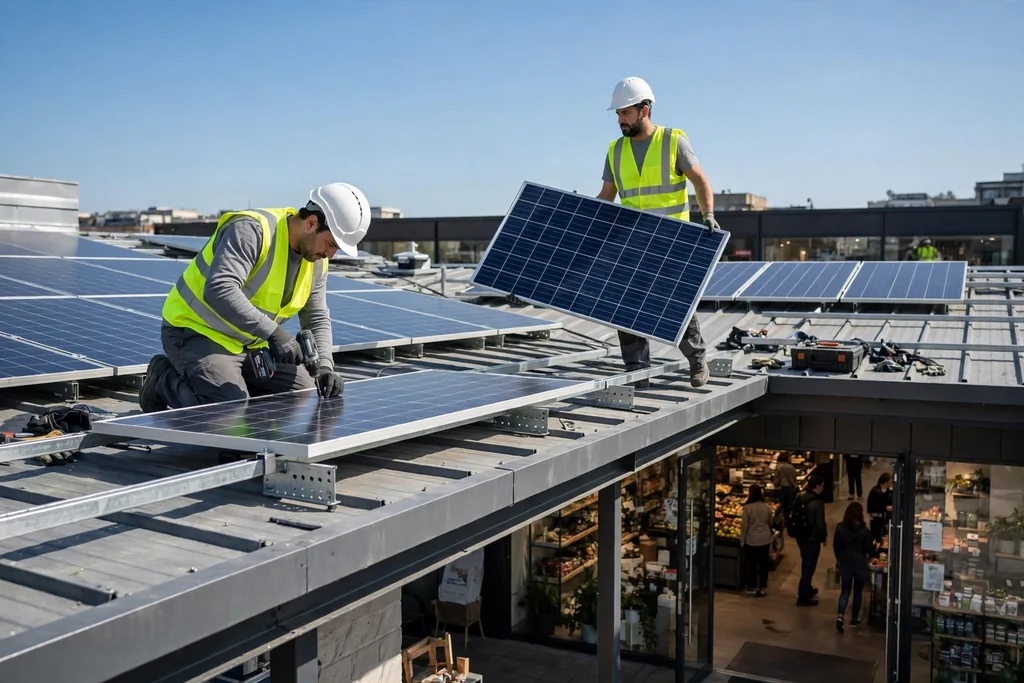
Installation without closing your business
Most commercial rooftop systems finish in 7–15 days from confirmation. Larger systems take longer. We tell you the honest timeline at survey. Not on install day. Your staff keeps working. Your customers keep coming. That is the point.
Will installation shut down my business?
No. Roof work happens independently of your shop floor. The noisy parts get scheduled around your trading hours. The final grid tie-in takes under an hour in most cases. We book it for a low-activity window.
Do you need batteries?
Does a shop need batteries?
Usually not. A shop that closes in the evening has nothing to move to the night. Storage moves afternoon power into the night. Closed premises gain nothing from it.
What about businesses that run at night, like hotels?
Hotels, hospitals, and cold storage run around the clock. For them, a hybrid system with lithium storage makes sense. It shifts daytime power into evening peak hours. It also keeps critical loads alive during outages.
The design changes. The economics still work. Batteries add cost. They must earn it. We size storage to your night load. Nothing more.
Financing and maintenance
Is financing available for commercial solar?
Yes. Pakistani banks offer solar finance, including Shariah-compliant options. Monthly instalments often run lower than the bill they replace. Ask your bank and your installer together. Get the full cost in writing first.
Do not sign a loan before a survey. Get the itemised quote first. Then take it to your bank. The bank checks the same numbers. A clear quote gets faster approval.
Do you offer maintenance contracts?
Yes. Zain Solar System offers maintenance plans for businesses. Scheduled cleaning. System health checks. Monitoring. Guaranteed response times.
Dust is Peshawar’s quiet enemy. Panels in Karkhano and Hayatabad gather dust fast. A dirty panel can lose 15–20% output. Regular cleaning protects your payback. We offer cleaning schedules that fit your site.
Monitoring shows your daily units on your phone. A sudden drop means dust, shade, or a fault. We catch it early. That keeps your system near its design output all year.
SOLAR CALCULATOR
Estimate Your Solar System Size
Enter your monthly bill and load shedding hours to get an instant system size estimate.
Monthly electricity bill (PKR)
Daily load shedding hours
After installation: what you get
You get warranty papers for panels and inverter. Panel warranties run up to 25 years on performance. Inverter warranties run about 10 years. Keep these papers safe. They protect your investment.
You also get a working system, not a promise. We test full output before handover. We show you the monitoring app. We explain basic care in plain words. Then we stay one WhatsApp message away.
Check your units once a month. Compare them with the estimate in your quote. Small drops mean dust. Big drops mean a fault. Call us either way. Early checks protect your payback.
FAQS
Frequently Asked Questions
Get a free commercial solar system survey in Peshawar
Send your last electricity bill on WhatsApp. Tell us your business type and area. We visit your site. We measure your load and roof. We give an itemised quote. Free. No obligation.
Surveys are free across Peshawar city. No advance payment for a quote. You pay only when you approve the system.
WhatsApp: 0301-5905082. Visit: Shop #9, Khalil Plaza, Nasir Bagh Road, Near Badizai Stop, Peshawar. Website: zainsolarsystem.pk. Zain Solar System. Peshawar’s commercial solar team.